
Cryptantha dumetorum
Cryptantha dumetorum
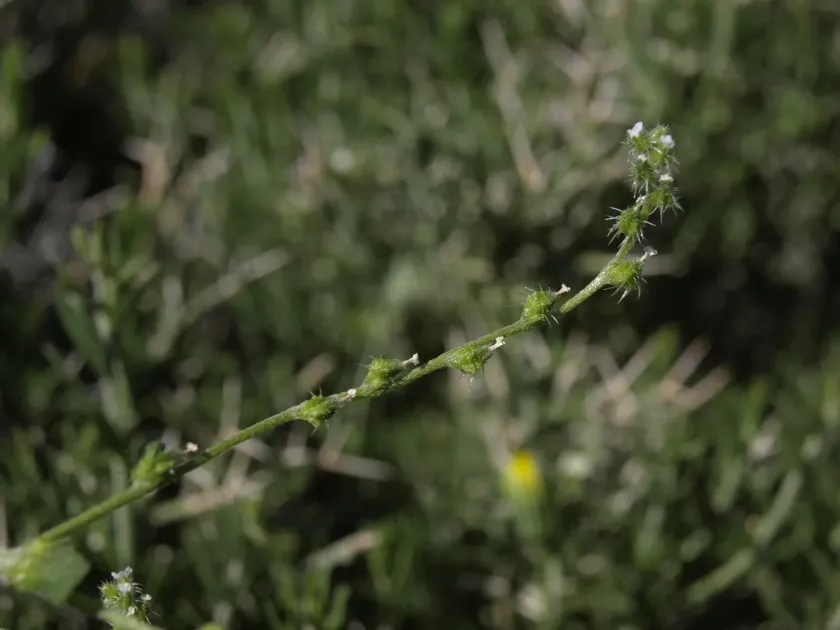
Description
Growing requirements
Cryptantha dumetorum is a herbaceous plant belonging to the Boraginaceae family. It is an endemic species native to the arid desert regions of the southwestern United States, primarily identified in the arid zones of California and Nevada.
The plant exhibits remarkable physiological adaptations to harsh, water-limited environments. It typically thrives in coarse, sandy, or rocky soils, which facilitate the rapid drainage necessary to prevent root rot in the rare cases of heavy moisture.
Botanically, this species is categorized as an ephemeral, meaning it completes its life cycle during the brief periods when soil moisture is adequate. Its growth rate is highly synchronized with sporadic rainfall events in the desert.
Temperature requirements for this plant include tolerance to extreme heat and intense solar radiation. It has evolved to remain in a dormant state or as a seed bank during the most severe summer heatwaves, protecting its genetic viability.
While not a conventional agricultural crop, it holds scientific importance for botanical studies on xerophytic plants. It does not require conventional fertilization or irrigation practices, as it has adapted to derive nutrients from desert soils.
Main diseases and pests
The primary threats to Cryptantha dumetorum populations are linked to habitat loss and environmental degradation caused by human activity in desert regions.
Invasive plant species pose a significant threat by competing for limited soil moisture and space, which the cryptantha relies on for its rapid reproductive cycle.
Off-road vehicle traffic is a severe threat, as it causes soil compaction and destroys the surface seed banks that the plant relies on to regenerate after periods of drought.
Due to its specialized defensive adaptations, such as dense trichomes (hairs) covering the foliage, the plant is relatively resistant to standard herbivorous insects and major pests.
Pathogenic risks are minimal in the dry environment, as the lack of humidity acts as a natural barrier to the development of most fungal and bacterial plant diseases.