
Cryptantha decipiens
Cryptantha decipiens
Description
Growing requirements
Cryptantha decipiens is an annual herbaceous plant belonging to the Boraginaceae family. While not a conventional agricultural crop, it serves as a specialized example of desert flora adapted to arid environments.
The plant is native to the southwestern regions of the United States. Its natural habitat consists of dry, open areas, often in sandy or rocky soils where moisture levels are extremely low throughout the growing season.
Environmental requirements for this species include full solar exposure and exceptionally well-draining soil. It thrives in soils that lack rich organic matter, mimicking the poor nutrient profile of its native desert ecosystems.
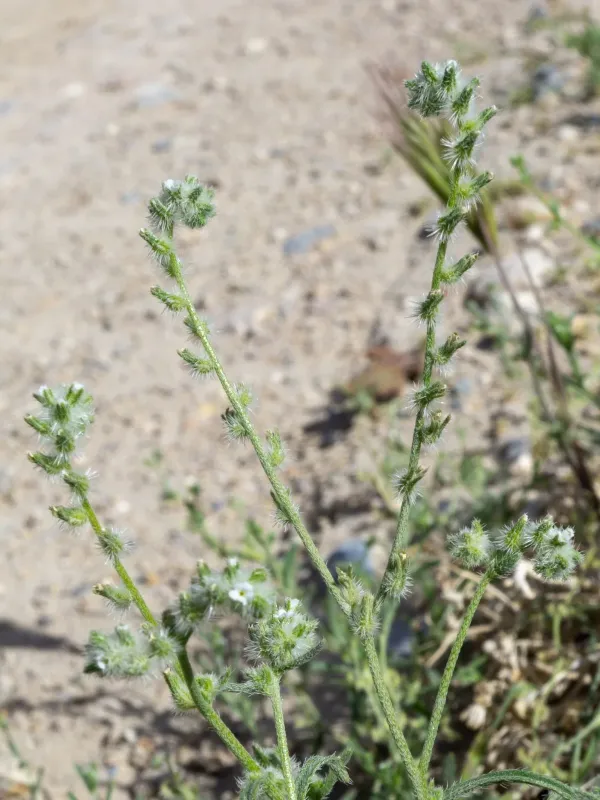
Botanically, Cryptantha decipiens features a branched, hairy stem and narrow leaves, which are adaptations designed to conserve water under intense heat. The flowers are small, white, and organized into dense, spiraling inflorescences.
Cultural management in xeriscaping or research trials focuses on mimicking its natural dormancy and growth cycles. The plant is highly resilient and requires very little human intervention if the local climate conditions align with its evolutionary adaptations.
Main diseases and pests
The primary threats to this species are soil-borne pathogens and root rot, typically caused by excess moisture or poor drainage. In a managed environment, preventing water accumulation around the root crown is essential for survival.
Insects, particularly sap-sucking pests like mites or aphids, can become a problem during periods of extreme environmental stress. Maintaining proper air circulation and avoiding overhead irrigation are the best preventative measures.