
Cryptantha creutzfeldtii
Cryptantha creutzfeldtii
Description
Growing requirements
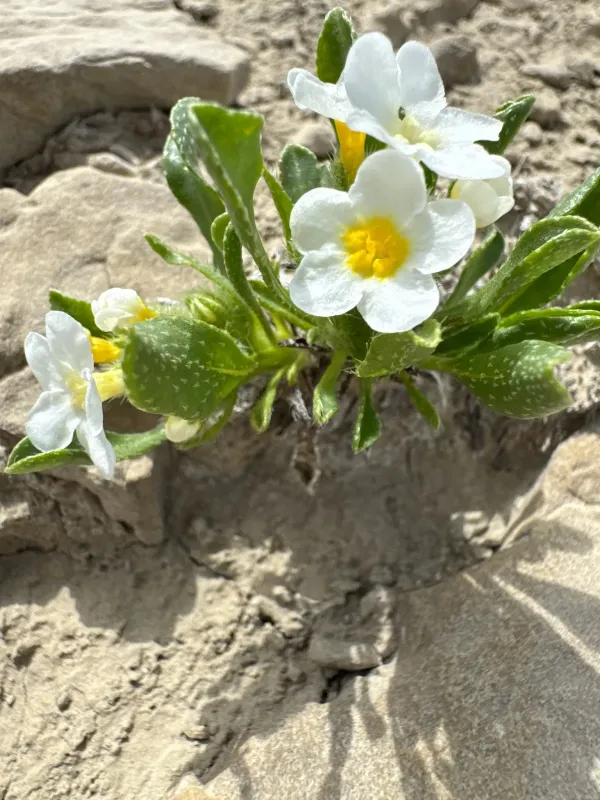
Cryptantha creutzfeldtii is a perennial herbaceous plant belonging to the Boraginaceae family. It is a highly specialized endemic species, native exclusively to restricted areas within the state of Utah, USA, where it thrives in extreme desert conditions.
The plant is uniquely adapted to gypsum-rich soils, which are considered poor and inhospitable for most agricultural crops. Its survival strategy involves specialized root adaptations that allow it to access moisture and nutrients in harsh, mineral-heavy rocky substrates.
Botanically, it features dense pubescence on its foliage, a critical adaptation that reflects intense sunlight and reduces water loss through transpiration. This trait is common among desert-adapted species, enabling them to endure prolonged periods of high heat and drought.
In terms of environmental requirements, it demands full sun exposure and extreme soil drainage. Any form of waterlogging is detrimental, as the species has evolved for arid, well-draining environments where moisture levels remain consistently low throughout the year.
While not a traditional agricultural crop, Cryptantha creutzfeldtii is of significant interest to botanists and conservationists. Due to its status as an endangered endemic, it is not cultivated for human use but serves as a vital component of desert biodiversity.
Main diseases and pests
The primary threats to Cryptantha creutzfeldtii are rooted in habitat destruction and anthropogenic interference. Activities such as mining operations and livestock grazing in its native range directly threaten the fragile crusts of the soil it inhabits.
Soil erosion caused by human activity remains a major factor in the decline of this species. Since the plant relies on stable rocky outcrops to anchor its growth, any disturbance that leads to substrate destabilization significantly lowers the population's survival rate.
Climate change poses a long-term threat to the species, particularly through the alteration of precipitation patterns and the potential decline of specific pollinator insects. The lack of genetic diversity in small, isolated populations further increases the risk of local extinction.
Pathogen risk is generally low in its native range due to the extreme environment, but human encroachment can introduce invasive species or pathogens that disrupt the natural balance. Strict management and protected area designations are the primary tools for ensuring its survival.
Conservation efforts currently focus on habitat protection rather than agronomic propagation. Because the plant is highly sensitive to soil disturbance, its restoration in the wild requires careful ecological management and minimal human intervention.