
Cryptantha crassisepala
Cryptantha crassisepala
Description
Growing requirements
Cryptantha crassisepala is a specialized annual herbaceous plant belonging to the Boraginaceae family. It is widely recognized for its high degree of adaptation to the arid and semi-arid climates of the North American desert regions.
This species is native to the southwestern United States and northern Mexico. It typically inhabits sandy, gravelly, and open soils, thriving in areas where moisture availability is highly unpredictable and scarce.
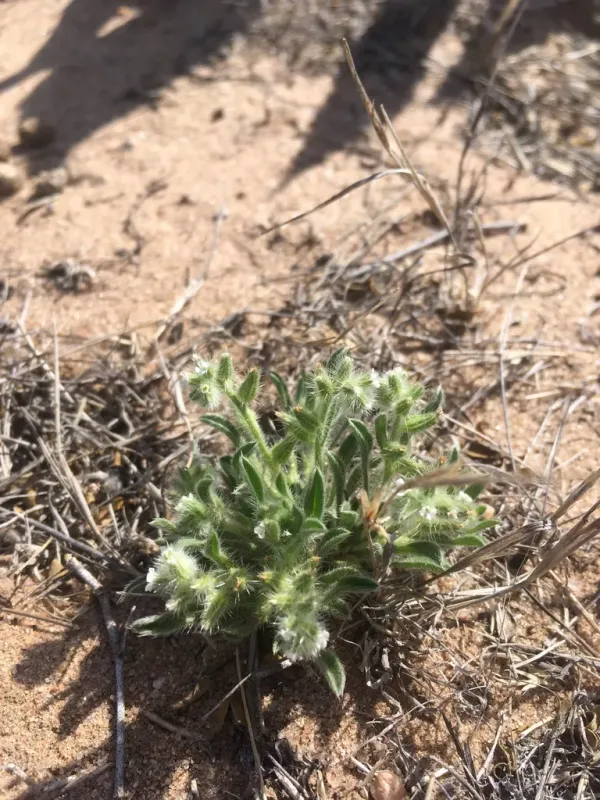
The botanical structure of the plant includes a dense layer of stiff hairs, known as hispid pubescence, which serves as a protective mechanism against extreme water loss and thermal stress during peak daylight hours.
Growth requirements for this plant focus heavily on soil structure; it requires excellent drainage to prevent root rot. It does not tolerate prolonged soil saturation, making it unsuitable for areas with high rainfall.
The plant follows a rapid life cycle pattern, germinating and flowering during the short window when seasonal moisture is present, thus avoiding the intense heat of the peak summer season.
Main diseases and pests
The health of Cryptantha crassisepala populations is frequently challenged by fungal pathogens that thrive during periods of unusual humidity, leading to decay in the delicate root systems.
Various desert insects act as primary pests, feeding on the foliage and reproductive structures of the plant, which can significantly reduce seed output during seasons with low precipitation.
Overgrazing by livestock remains a major environmental threat, causing not only direct physical damage to the plants but also disturbing the fragile soil surface crust essential for seedling survival.
Competition from non-native invasive plant species, which often utilize soil nutrients more aggressively, poses a significant threat to the survival of native Cryptantha colonies.
Despite these threats, the species maintains stability through a robust soil seed bank, ensuring that seeds can germinate even after several years of dormancy when conditions are optimal.