
Cryptantha clevelandii
Cryptantha clevelandii
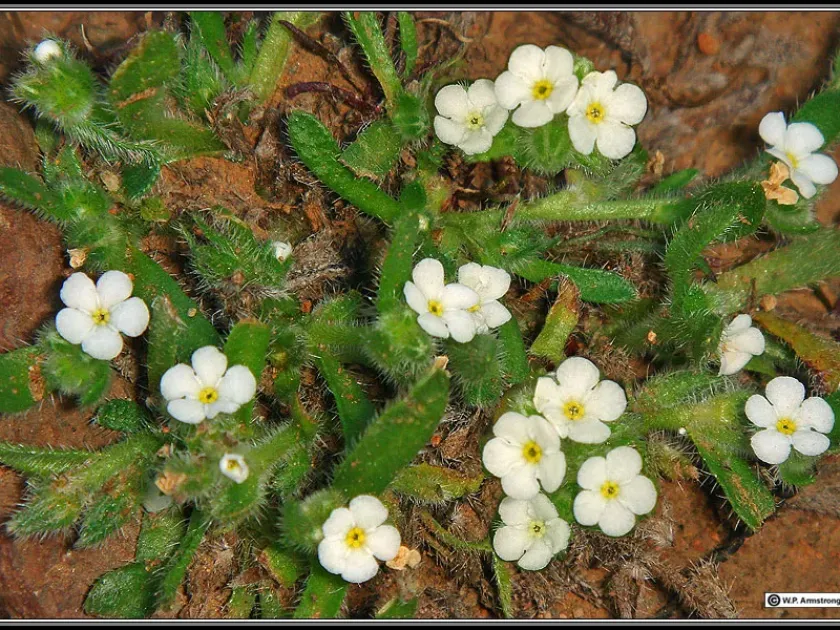
Description
Sowing dates
Cryptantha clevelandii is an annual herbaceous plant belonging to the Boraginaceae family, widely known for its ability to thrive in arid and semi-arid environments. Sowing typically aligns with the onset of the rainy season to ensure moisture availability for germination.
In a controlled agricultural setting, seeds are sown in well-prepared, loose soil. Since the seeds are extremely small, they should be barely covered with substrate to allow sufficient light exposure, which acts as a key trigger for the germination process.
Optimal sowing density is crucial to ensure that every individual plant has enough space for air circulation. Proper spacing prevents the formation of a microclimate that might favor the development of fungal pathogens later in the growing cycle.
The timing of the sowing must be precise; early sowing during cooler temperatures enhances seedling vigor. A steady moisture supply is required for the first two weeks post-sowing to establish a robust root system.
It is recommended to conduct a viability test on seeds prior to planting. Using high-quality seed lots significantly increases the probability of uniform field emergence, which is essential for efficient crop management.
Growing requirements
This species requires soils with excellent drainage, such as sandy loams or gritty substrates. Soil compaction must be avoided at all costs, as the roots are sensitive to hypoxia caused by stagnant water or anaerobic conditions.
Full sun exposure is a non-negotiable requirement for the healthy development of Cryptantha clevelandii. Any degree of shade will negatively impact the physiological processes and result in weak, spindly growth patterns.
Climatically, the plant prefers temperate conditions with distinct wet and dry seasons. While it exhibits tolerance to brief cold spells, it is primarily adapted to mild winter temperatures found in Mediterranean-type climates.
Soil fertility management should focus on maintaining a neutral pH level. While the plant can tolerate low-nutrient soils, supplemental phosphorus application during the vegetative stage can help in building a stronger floral architecture.
Moisture control is the most critical agronomic factor. Irrigation systems, such as drip lines, are preferred over overhead watering to prevent leaf wetness, which could increase the risk of disease incidence.
Main diseases and pests
Root rot is the most common threat encountered in poorly managed fields. This disease is usually triggered by persistent soil saturation, necessitating careful water management and excellent soil structure maintenance.
Foliar pests, specifically aphids, tend to colonize the plant during the rapid growth phase. Integrated pest management strategies, utilizing beneficial predatory insects, are the most sustainable approach for large-scale control.
Weed competition is significant for Cryptantha clevelandii due to its relatively slow initial growth rate. Manual weeding or the use of precise mechanical cultivation is required until the plants reach the canopy closure stage.
Regular scouting for signs of mildew is essential during periods of high humidity. Early detection and the application of organic fungicides can effectively prevent the spread of infection across the field.
Maintaining a clean agricultural environment is the best defense against pests and diseases. Removing diseased plants promptly prevents the spread of pathogens and ensures the overall health of the crop cycle.