
Cryptantha cinerea
Cryptantha cinerea
Description
Growing requirements
Cryptantha cinerea is a hardy herbaceous perennial plant belonging to the Boraginaceae family. Originally found in the arid landscapes of North America, it has developed significant adaptations to survive in resource-limited environments.
The species thrives in well-drained, sandy, or rocky soils. It is particularly well-suited for alkaline environments where other crops often fail. Proper drainage is the single most important factor for the health of its root system.
As a light-loving plant, it requires full sun exposure for optimal growth and flowering. It displays high heat tolerance, making it an excellent candidate for regions experiencing prolonged summer temperatures and low rainfall.
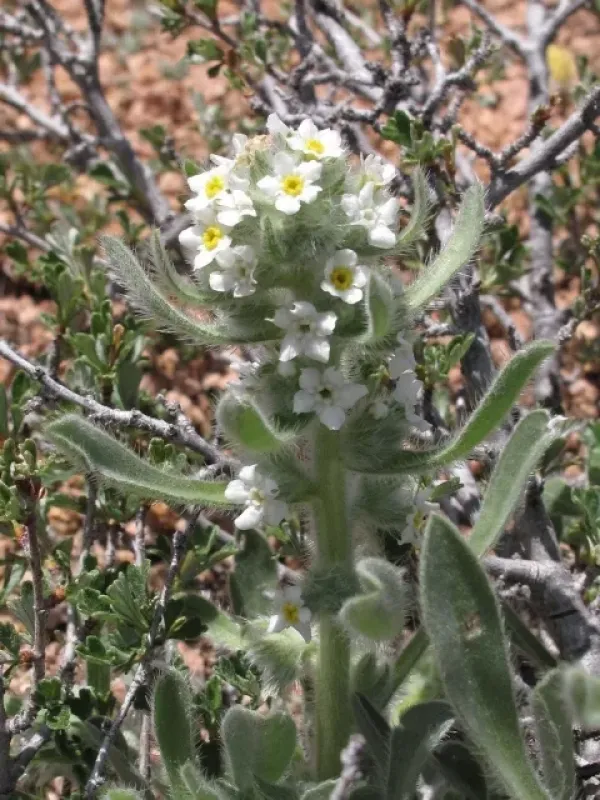
The morphology of the plant includes stiff, pubescent leaves that reduce transpiration rates. The foliage typically exhibits a grayish or ash-colored appearance due to the dense covering of trichomes, which reflect excess sunlight.
In terms of agricultural use, this species is primarily valued for environmental management. Its ability to stabilize loose, sandy substrates makes it a vital component in erosion control and the restoration of degraded arid lands.
Main diseases and pests
Root rot is the most prevalent threat to Cryptantha cinerea, typically caused by waterlogged soils or excessive irrigation. The plant is highly sensitive to root asphyxiation, which leads to rapid decline.
Insects and certain species of nematodes can cause significant stress by attacking the root zone and the vascular tissues. Early detection of infestation is crucial to prevent the spread of these pests throughout the field.
Weed pressure remains a major challenge, especially during the establishment phase. Because the plant grows relatively slowly at first, invasive weeds can easily overwhelm it if not managed through timely mechanical weeding.
Pathogenic fungi can become an issue if humidity remains high for an extended period. Avoiding overhead irrigation and promoting good air circulation are essential preventive measures for keeping the crop healthy.
Monitoring the soil moisture levels and ensuring that the field remains free of competing vegetation are the primary steps in protecting this crop from common agricultural threats.