
Cryptantha celosioides
Cryptantha celosioides
Description
Growing requirements
Cryptantha celosioides is a perennial herbaceous plant belonging to the Boraginaceae (borage) family. Native to the arid and semi-arid regions of western North America, this species is highly specialized for life in harsh, resource-limited environments such as dry prairies and rocky slopes.
The plant thrives in well-draining, coarse-textured soils including sand and gravel. In an agricultural or land-management context, its primary value lies in its ability to colonize degraded areas where nutrient availability is low and water conservation is essential for survival.
Climate requirements for this plant are centered on high solar exposure and arid conditions. It is physiologically sensitive to waterlogging, which can disrupt its cellular processes and encourage decay, as the species has adapted over time to avoid moisture retention in its root zone.
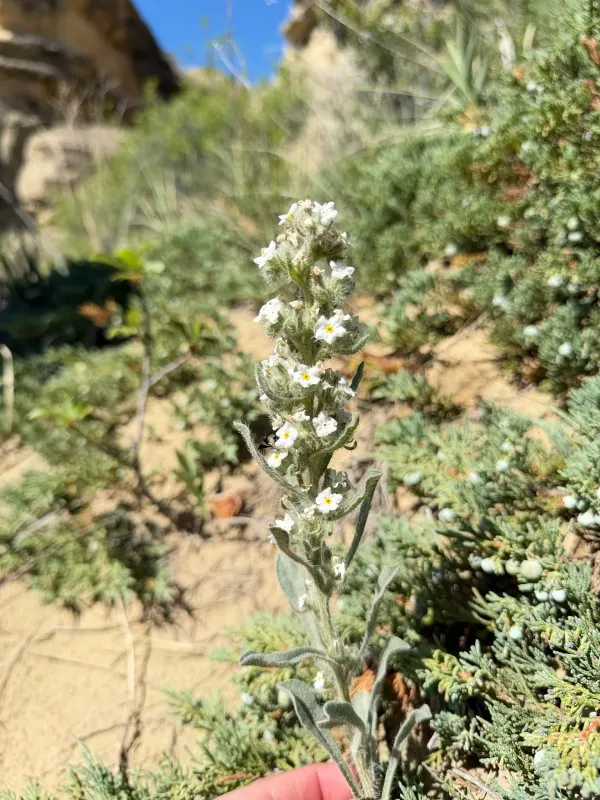
Botanical identification is aided by the plant's dense, coarse pubescence (hairs) covering its stems and narrow leaves. This adaptation serves a dual purpose: protecting internal tissues from excessive water loss via transpiration and shielding the plant from the intense ultraviolet radiation of open, high-altitude or arid climates.
While not a conventional commodity crop, its role in ecological restoration is significant. It functions as a hardy ground cover that assists in stabilizing soil structure and serves as a vital resource for native pollinators in environments where few other floral resources can persist throughout the hot summer months.
Main diseases and pests
The most prominent threats to Cryptantha celosioides involve pathogen proliferation in suboptimal conditions. Specifically, root rot and fungal wilt are common consequences of prolonged high humidity or poorly managed irrigation systems that lead to persistent soil saturation.
Insect herbivory is generally manageable, though specialized prairie pests may target the plant during early growth stages. Maintaining adequate spacing between individual plants and ensuring a high-drainage site are the primary methods for mitigating the risk of disease and ensuring long-term health.