
Cryptantha barbigera
Cryptantha barbigera
Description
Growing requirements
Cryptantha barbigera, commonly known as bearded cryptantha, belongs to the Boraginaceae family. It is a desert-dwelling annual herb adapted to harsh arid conditions.
The plant originates from the Southwestern United States and Northern Mexico. It typically thrives in sandy, well-draining soils within open, sunny desert habitats.
The climate requirements for this species are strict, necessitating high temperatures and extremely low moisture levels. It acts as an ephemeral, blooming rapidly after spring rains.
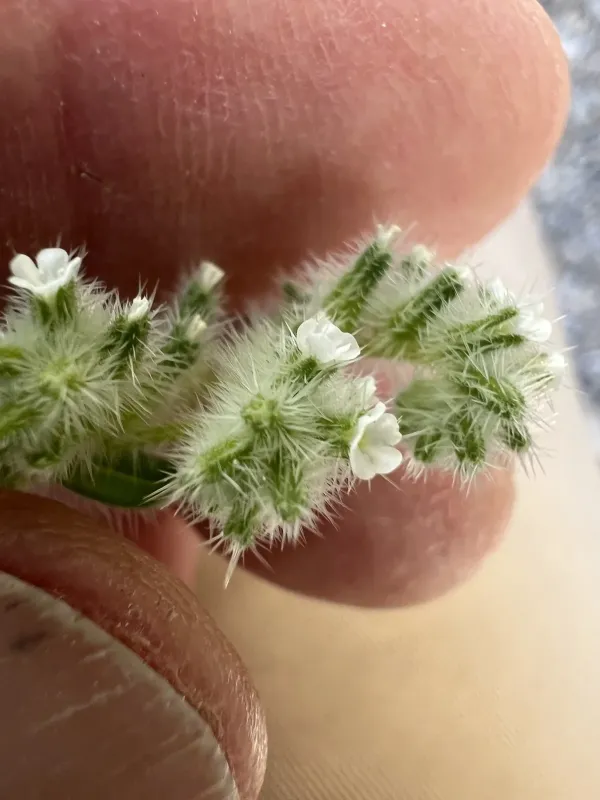
The species is distinguished by its dense covering of stiff hairs (trichomes), which serve as a morphological adaptation to minimize transpiration and protect the plant from sun exposure.
While not a major commercial crop, it is significant in the study of desert ecology and is increasingly recognized in xeriscaping projects for arid regions.
Main diseases and pests
In its natural habitat, Cryptantha barbigera is highly resistant to standard agricultural pests, though it may occasionally be grazed by desert-dwelling insects like grasshoppers.
Excessive soil moisture is the primary physiological threat to the plant. Poor drainage leads directly to root rot, which is fatal due to the plant's specialization for dry substrates.
Fungal diseases are rarely documented in wild populations, as the dry atmosphere prevents the germination and spread of most airborne pathogens found in wetter climates.
Competition from non-native invasive weeds poses a significant risk, as these plants may outcompete the slow-growing seedlings for the scarce resources available after rainfall.
Agricultural management of this species, when used for botanical restoration, requires strictly controlling soil moisture and avoiding the application of synthetic fertilizers.