
Sacred garlic pear
Crateva unilocularis
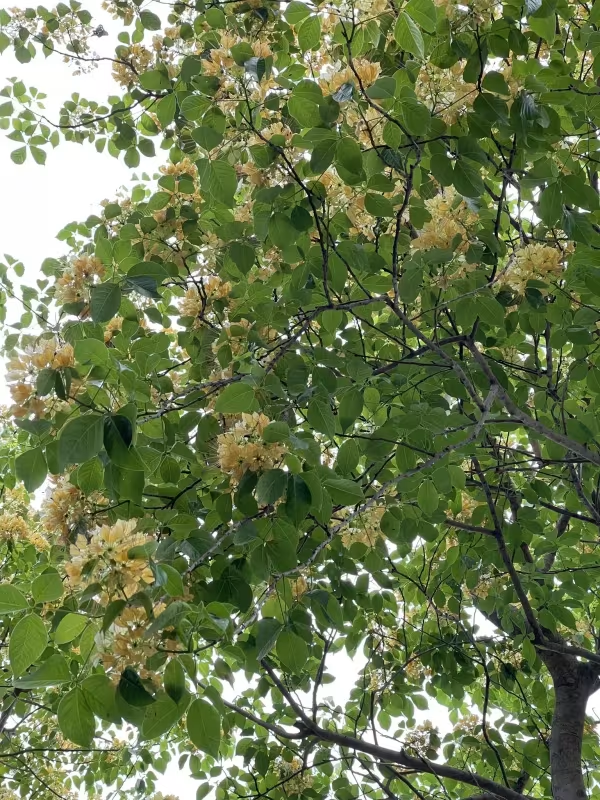
Description
Sowing dates
The propagation of the Sacred Garlic Pear, a member of the Capparaceae family, is typically carried out through generative methods. The seeds exhibit good viability but often require pre-stratification or soaking in warm water to accelerate the germination process.
Sowing should be performed in well-drained nursery beds enriched with organic matter. The optimal time for sowing is the beginning of the rainy season, which provides the young seedlings with the necessary moisture levels to ensure successful establishment during their first months.
If utilizing cutting as an alternative method, maintaining high humidity and a soil temperature of approximately 25-28 degrees Celsius is essential. The cuttings should be woody and feature several nodes to facilitate the development of a robust root system.
Once seedlings reach a height of 30-40 centimeters, they can be transplanted to their permanent location. The spacing between trees should be at least 5-7 meters, as the crown of the Crateva tends to spread significantly and requires good airflow.
Agronomists recommend planting during overcast weather or in the evening hours to reduce transpiration and facilitate the adaptation of the root system to the new soil conditions.
Growing requirements
As a representative of tropical flora, the Sacred Garlic Pear requires consistently high ambient temperatures throughout the entire vegetative period to support optimal physiological development.
The plant prefers well-lit areas with direct exposure to sunlight. In shaded conditions, the plant may exhibit elongated shoots, reduced flowering intensity, and a weakened overall immune system, making it more susceptible to various pathogens.
Soil preferences include loamy or sandy soils with a neutral or slightly acidic pH. Excellent water permeability is a critical requirement, as waterlogging in the root zone can be lethal to the species and often leads to the development of root rots.
The crop demonstrates moderate drought tolerance once the tree is fully established and mature. However, to achieve maximum fruit yields, regular irrigation must be provided during periods of prolonged precipitation deficit.
In regions with a distinct dry season, the tree may shed its leaves as a natural defensive response to unfavorable environmental conditions.
Yield
The yield of Crateva unilocularis depends directly on the age of the tree and the quality of management practices. Fruiting typically begins between the 3rd and 5th year, with yields increasing gradually as the tree canopy develops.
The fruits are large, fleshy berries that, when ripe, develop a distinct aroma and flavor reminiscent of a mixture between garlic and exotic tropical fruits. A healthy adult tree can produce a significant volume of fruit during a favorable season.
Fruits are harvested as they ripen, which is signaled by a change in peel color to a yellow or brownish hue. Timely harvesting prevents premature dropping, which is vital for maintaining the commercial quality of the fruit.
The economic utilization of the crop spans both the food industry and traditional medicine. In folk practices, both fruits and bark are used for their antiseptic and anti-inflammatory properties, enhancing the crop's agricultural value.
Due to a high concentration of bioactive compounds, Crateva fruits are increasingly used in the production of dietary supplements, making this crop an economically promising option for tropical agricultural enterprises.
Main diseases and pests
The primary threats to Crateva are fungal diseases associated with periods of excessive rainfall. High humidity promotes the development of powdery mildew and various leaf spot diseases that impact the foliage.
Pests such as aphids and spider mites can cause substantial damage to young seedlings by feeding on succulent tissues. Regular inspection of the underside of leaves allows for early detection of pest colonies and prompt implementation of mitigation measures.
In industrial plantations, it is essential to utilize integrated pest management strategies, combining preventive agrotechnical practices with environmentally safe treatments for insect control.
To prevent the spread of infections, it is recommended to conduct sanitary pruning of affected branches and maintain a clean area around the base of the tree, removing plant debris where fungal spores might overwinter.
Selecting the correct planting site that ensures proper drainage and ventilation remains the most effective strategy for minimizing losses from diseases and pests without the need for harsh chemicals.
Harvesting
Harvesting the Sacred Garlic Pear requires care, as fruits can be easily damaged upon impact. Hand harvesting using ladders is often practiced to preserve the integrity of the fruit's peel.
After harvesting, fruits should be sorted by ripeness and size. For transportation over long distances, ventilated containers are recommended to avoid overheating and decay during the logistics process.
Freshly picked Crateva fruits have a limited shelf life at room temperature. For an extended marketing or processing period, storing them in cool, dark rooms with moderate air humidity is advised.
Beyond the fruits, the bark of the tree is also harvested for its medicinal properties. The bark collection process must be carried out sustainably to avoid causing irreparable harm to the tree's health.
Farmers should adhere to the principles of sustainable land management, ensuring the tree has sufficient time to recover after both fruit harvesting and bark collection, which guarantees the longevity and consistent productivity of the plantation.