
Corymbia tessellaris
Corymbia tessellaris
Description
Growing requirements
Corymbia tessellaris belongs to the Myrtaceae family and is commonly known as the Moreton Bay ash. It is native to northern and eastern Australia and parts of Papua New Guinea, where it thrives in a range of diverse environmental conditions.
This tree species requires well-drained soil to prevent root issues, showing a preference for sandy or loamy textures. It is highly valued for its drought tolerance, making it an excellent candidate for restoration projects in arid or semi-arid climatic zones.
Climatically, the species prefers warm tropical or subtropical conditions. It performs best in full sun exposure, which is essential for maintaining a healthy structure and promoting the development of its distinctive canopy and characteristic tessellated bark.
Agricultural management of this crop involves maintaining appropriate planting distances to ensure airflow. Given its potential size, proper space allocation is critical for long-term growth and structural integrity of the individual trees in a plantation setting.
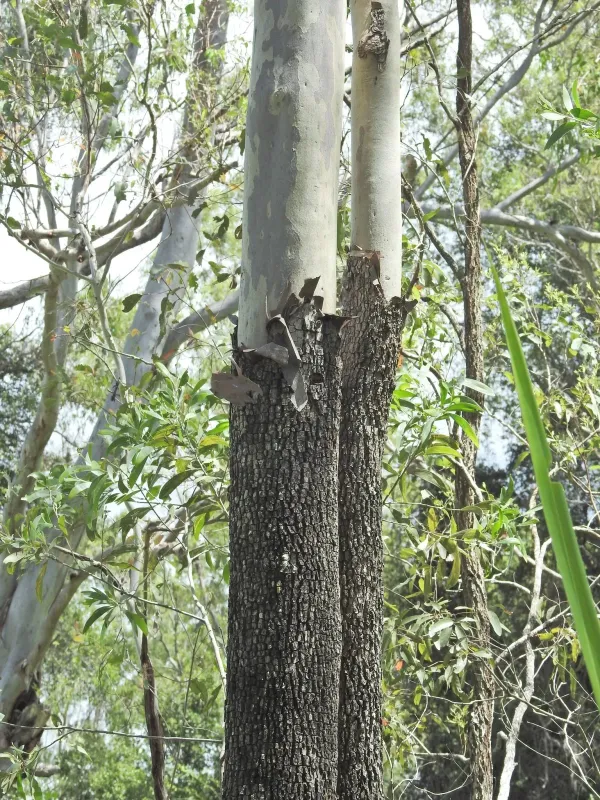
The botanical uniqueness of Corymbia tessellaris is defined by its two-toned appearance. The trunk is characterized by a rough, box-like bark at the base, which transitions to smooth, white, and deciduous bark higher up, aiding in its identification.
Main diseases and pests
Fungal pathogens associated with damp environments pose a significant threat to Corymbia tessellaris. Proper drainage and site selection are the primary defense mechanisms to ensure the longevity of the stand.
Insect pests, including various leaf-eating beetles, can cause localized defoliation. While healthy trees often survive these attacks, young saplings may experience stunted growth, requiring targeted management interventions.
Boring insects are another concern as they target the woody tissues of the trunk. If left unchecked, these infestations can weaken the structural integrity of the timber and invite further secondary infections or rot.
Environmental stress, particularly prolonged flooding or extreme soil saturation, can lead to the death of feeder roots. Regular monitoring of the soil moisture levels is necessary in intensive cultivation areas.
Integrated pest management protocols, including the encouragement of natural predators, are recommended to maintain tree health. Keeping the area surrounding the tree base clean of dense debris also prevents the buildup of harmful pathogen populations.