
Corymbia grandifolia
Corymbia grandifolia
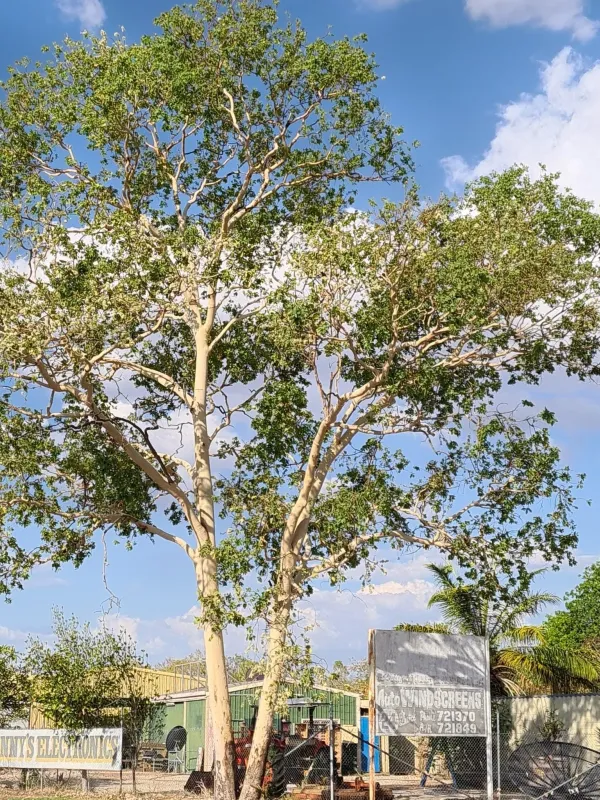
Description
Growing requirements
Corymbia grandifolia is a robust evergreen tree belonging to the Myrtaceae family. Known for its distinct large, ovate leaves, this species is a prominent member of the tropical woodlands in northern Australia, where it thrives in diverse soil environments.
This species is highly adapted to a climate characterized by distinct wet and dry seasons. It requires full sunlight to achieve optimal growth and is physiologically adapted to withstand extended periods of high heat, making it a reliable choice for reforestation in arid zones.
Regarding soil requirements, the tree prefers well-drained sandy or loamy textures. It performs poorly in waterlogged environments where root development is severely inhibited, emphasizing the need for selecting planting sites with effective natural or artificial drainage.
Agricultural management during the early establishment phase is critical for the survival of the trees. Ensuring that saplings are free from competing vegetation is essential, as the species is vulnerable to nutrient and light suppression in its juvenile stages.
Genetic diversity within the species allows for adaptation to varied altitudes and precipitation levels. However, it remains strictly a tropical species with virtually no tolerance for frost, which dictates its geographical range for commercial plantation development.
Yield
The primary economic use of Corymbia grandifolia lies in its high-quality timber. Its wood is recognized for being hard and durable, which makes it suitable for heavy-duty construction, the production of durable flooring, and various industrial applications.
Beyond timber, the species serves as a valuable resource for apiculture. Its flowers produce significant amounts of nectar, supporting healthy bee populations and enabling the production of unique, high-quality honey in regional forestry areas.
The leaves and bark contain essential oils that are of interest for pharmacological and industrial extraction. Research into these biochemical properties highlights the potential for developing natural antimicrobial agents from the biomass generated by this species.
In landscape management and agroforestry, Corymbia grandifolia acts as a structural component for windbreaks. These windbreaks reduce soil erosion caused by high-velocity winds, effectively stabilizing the topsoil and improving the microclimate for adjacent crops.
The rapid growth rate observed in favorable sites makes it a candidate for biomass production. Sustainable plantation management focuses on high-density planting and selective thinning to maximize the yield of merchantable timber over the rotation cycle.
Main diseases and pests
Fungal diseases, particularly those affecting the foliage, pose a significant threat to tree health, especially in areas with high humidity. Preventive measures, such as maintaining proper plant spacing to ensure airflow, are key to minimizing disease transmission.
Insect pests, including wood-boring beetles and termites, can compromise the structural integrity of the trunks. Integrated pest management programs, including regular health assessments, are vital to preventing large-scale infestations in timber plantations.
Fire remains the most catastrophic threat to Corymbia plantations. The combination of intense heat and dry biomass makes these trees susceptible to fire damage, necessitating the installation of firebreaks and the maintenance of clear buffer zones around the property.
Nutrient deficiency can lead to reduced growth vigor and leaf chlorosis, particularly when trees are grown in highly leached soils. Periodic soil testing and the application of balanced micronutrient fertilizers are often necessary to maintain plantation productivity.
Invasive weed species can outcompete young Corymbia seedlings for moisture and nutrients. Rigorous site preparation and consistent mechanical weeding during the first few years of growth are necessary steps to ensure the successful establishment of the tree stand.