
Conyza ulmifolia
Conyza ulmifolia
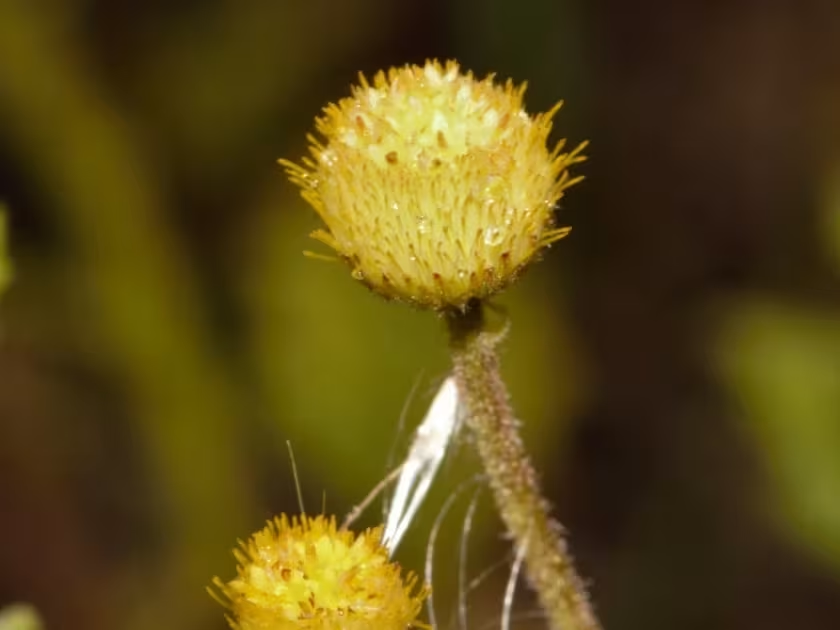
Description
Sowing dates
The sowing of Conyza ulmifolia typically occurs in the spring when soil temperatures reach 12–15 degrees Celsius, ensuring optimal conditions for seed germination.
Since the seeds are quite small, surface sowing or shallow placement is required to ensure adequate light exposure, which is critical for the activation of the seeds.
Industrial planting is best performed in rows with a spacing of 30 to 45 centimeters to provide each plant with sufficient nutrients and facilitate mechanical weed control.
For uniform germination, it is recommended to apply a light roller to the soil surface after seeding to ensure firm contact between the seeds and the substrate.
In regions with milder winters, fall sowing can be considered, which often results in more vigorous plant establishment by the time the following spring season begins.
Growing requirements
Conyza ulmifolia, a member of the Asteraceae family, is a resilient plant that adapts well to various soil types but thrives most effectively in nutrient-rich, well-draining loams.
The crop requires full sun exposure for healthy development, as any significant shading can result in leggy growth and a decrease in desired secondary metabolites.
While the plant exhibits moderate drought tolerance, consistent irrigation during the peak growth phase and bud formation is essential to maximize overall biomass yield.
Maintaining a soil pH within the neutral range of 6.0 to 7.5 provides the best conditions for the nutrient uptake necessary for robust growth and development.
The application of balanced mineral fertilizers, especially during the early stages of plant development, significantly promotes faster growth and higher crop density.
Main diseases and pests
Fungal diseases, particularly powdery mildew, represent the primary threat to the crop, often thriving in environments with poor air circulation or high humidity.
Pests such as aphids and spider mites may target young shoots, potentially stunting development; regular field scouting is essential to identify infestations early.
Implementing proper hygiene, such as removing crop debris and managing weed populations, significantly reduces the pressure from both diseases and local insect pests.
The use of integrated pest management strategies, including biological control agents, helps protect the crop while maintaining the purity of the final plant product.
Crop rotation should be strictly managed, avoiding planting in soil previously used for other Asteraceae species for at least three years to prevent soil-borne pathogens.
Harvesting
Harvesting should take place during the peak flowering stage when the concentration of biologically active compounds within the aerial parts of the plant is at its highest.
Mechanical harvesting equipment is typically used, with careful adjustment of the cutting height to avoid incorporating soil or root impurities into the harvested material.
Immediate post-harvest processing is required, involving drying in well-ventilated facilities at temperatures not exceeding 40 degrees Celsius to preserve the plant's integrity.
Controlled drying ensures that the leaves maintain their medicinal or technical properties and prevents the development of mold or enzymatic degradation during the drying phase.
Final storage must occur in cool, dry, and dark conditions to ensure the shelf life of the dried product remains stable for subsequent commercial distribution or use.