
Conyza pinnata
Conyza pinnata
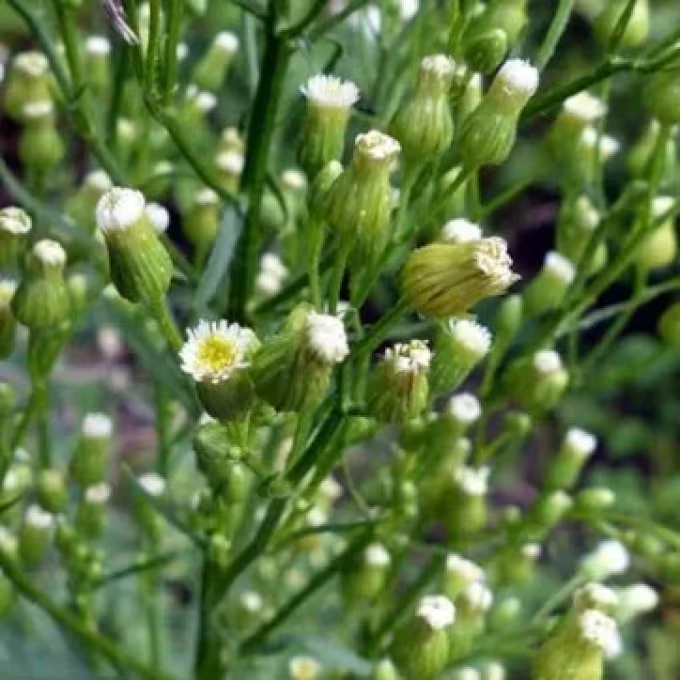
Description
Sowing dates
This species naturally propagates via seed dispersion facilitated by the wind, meaning direct sowing is rarely practiced. The seeds are light and equipped with a pappus, enabling them to travel long distances before landing on suitable substrates.
Germination typically occurs in the spring once soil temperatures reach a stable 12–15 degrees Celsius. The seeds are highly opportunistic, requiring only minimal contact with moist, light-exposed soil to trigger metabolic growth processes.
Due to the plant's high reproductive capacity, it can rapidly colonize bare soil areas. Farmers should monitor fields early in the season to identify any emerging seedlings, as they quickly establish themselves in the soil profile.
If management is required, shallow mechanical cultivation is the most effective approach for newly germinated plants. This technique disrupts the delicate root system before the plant develops its deeper taproot structure.
Seed bank longevity allows for multiple flushes of germination throughout the year depending on irrigation and rainfall. Therefore, persistent mechanical or chemical intervention may be necessary to suppress its presence effectively.
Growing requirements
As a member of the Asteraceae family, Conyza pinnata exhibits significant ecological adaptability. It thrives best in well-lit environments where competition for sunlight is low, making it common in open disturbed fields.
The plant demonstrates a strong preference for sandy or light loamy soils that offer excellent drainage. While it is quite hardy, it thrives under conditions that minimize waterlogging, which can otherwise impede root development.
Drought tolerance is a hallmark of this species, facilitated by its anatomical features such as leaf hairs that reduce water loss. These adaptations allow the plant to maintain metabolic activity even during periods of limited moisture.
Soil pH levels should ideally be neutral or slightly alkaline for optimal biomass production. While the species is capable of growing in nutrient-poor environments, access to nitrogenous fertilizers will increase its rate of maturity.
Management of the soil structure through regular disturbance is essential to prevent this plant from establishing dominance. Promoting dense canopy cover from primary agricultural crops can also naturally outcompete this species for resources.
Main diseases and pests
Conyza pinnata is notably resistant to most common agricultural pathogens. Its natural chemical profile serves as a deterrent to many pests, contributing to its resilience in diverse growing environments.
While some generalist herbivores may occasionally feed on its foliage, they rarely cause sufficient damage to curb the overall health or expansion of the plant. This makes biological control a challenging avenue of management.
Potential threats to the plant mainly involve soil-borne fungal infections, particularly under conditions of extreme moisture saturation. High humidity and poor drainage can lead to root rot, which is lethal to younger specimens.
Chemical control remains the primary methodology for managing this plant in commercial agriculture. Selective herbicides are typically employed to target the species during its early vegetative stages before it reaches reproductive maturity.
Ongoing monitoring of field perimeters and buffer zones is recommended to prevent the influx of seeds from neighboring uncultivated areas. Integrated pest management strategies that combine mechanical cultivation and herbicide rotation are most effective.