
Conyza apurensis
Conyza apurensis
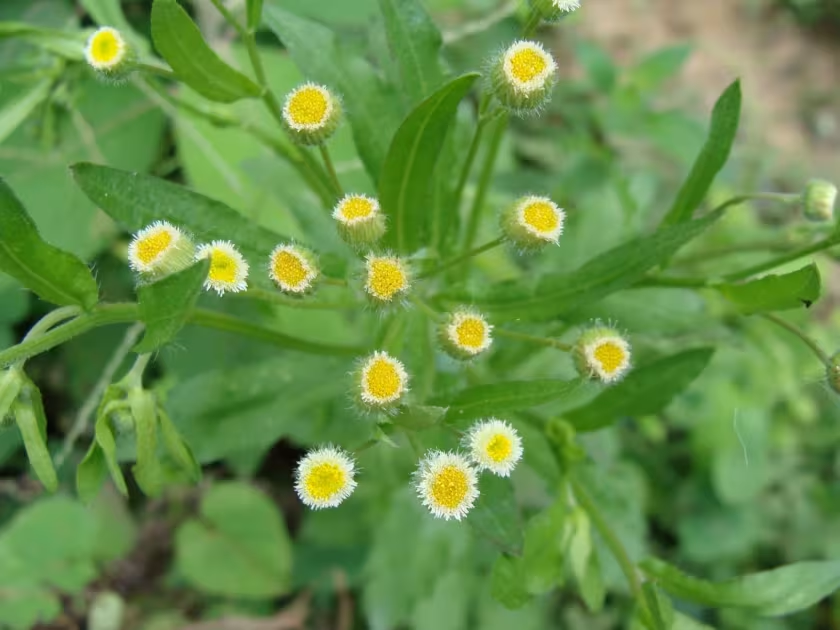
Description
Sowing dates
Conyza apurensis is a member of the Asteraceae family and is widely recognized in agricultural settings for its invasive potential and rapid growth cycle.
Seed germination typically initiates in early spring, synchronized with rising soil temperatures and moisture levels in the upper soil profile.
Farmers must execute timely field preparation, including cultivation, to eliminate early-season flushes of this species before seeding main crops.
The species produces a vast number of seeds that are easily dispersed by wind, allowing it to colonize large arable areas in short periods.
Understanding the phenology of the plant is critical for scheduling pre-emergent herbicide applications effectively to minimize crop competition.
Growing requirements
The plant thrives in full sun exposure, as it is highly sensitive to shading by canopy-forming crops or dense vegetation cover.
It performs best in well-drained, fertile soil, although it exhibits significant plasticity in adapting to various soil compositions, including sandy loams.
Effective water management is essential, as Conyza apurensis possesses a deep root system that allows it to outcompete crops during dry spells.
While tolerant to a range of environmental stressors, consistent moisture during the vegetative stage accelerates its development and seed set.
Sustainable agronomic practices, such as crop rotation and the use of cover crops, are recommended to suppress the establishment of this invasive species.
Main diseases and pests
Conyza apurensis acts as a primary vector and host for several plant viruses and soil-borne pathogens that target high-value agricultural crops.
The plant is frequently infested by aphids and other sap-sucking insects, which may migrate to neighboring crops and cause significant economic damage.
Fungal diseases like powdery mildew are commonly observed on its foliage, necessitating vigilant field monitoring during high-humidity seasons.
Chemical control programs often face challenges due to the development of herbicide resistance, requiring an integrated weed management strategy.
Mechanical control methods, such as hoeing or shallow tillage, remain the most reliable way to prevent the weed from reaching the reproductive stage.