
Bilbao fleabane
Conyza bilbaoana
Description
Growing requirements
Bilbao fleabane (Conyza bilbaoana) belongs to the Asteraceae family. It is recognized primarily as an invasive weed in agricultural landscapes, rather than a cultivated crop, due to its rapid colonization abilities.
Native to South America, this species has expanded its range significantly, becoming a notable issue in European agricultural systems. It thrives in disturbed habitats, frequently occupying fallow land, roadsides, and the margins of crop fields.
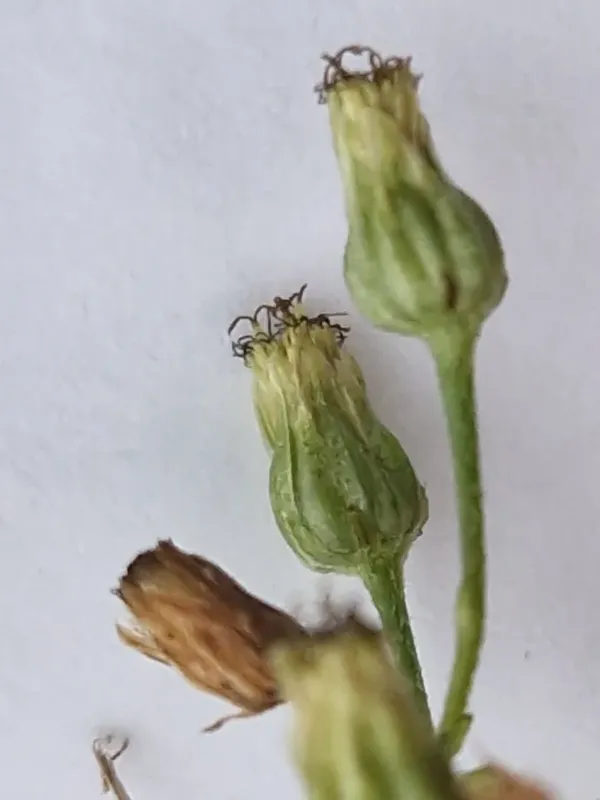
The plant typically features a robust, branched stem and lanceolate leaves. It produces dense inflorescences composed of numerous tiny flower heads, which contribute to its prolific seed production and invasive potential.
It prefers sunny, open environments and can grow in various soil types, including compacted ones. The ability of Bilbao fleabane to extract water and nutrients efficiently often leads to yield losses in associated grain or row crops.
Management requires a combination of cultural practices, such as crop rotation and timely mechanical weeding. Because it grows quickly, maintaining a clean seedbed is essential for minimizing its impact during the early crop development stages.
Main diseases and pests
The primary threat posed by this species is its aggressive dispersal mechanism. Thousands of wind-borne seeds allow the weed to spread rapidly across large distances, complicating control efforts for farmers in a given region.
Few pests or diseases impact Bilbao fleabane, as the plant contains secondary metabolites that deter most herbivores. This natural resilience makes it difficult to manage without direct chemical or mechanical intervention.
Outbreaks of fungal diseases, such as mildew, are occasionally observed, yet they rarely reduce the weed population density. Thus, relying on natural biological control is generally insufficient for effective field management.
Chemical control is often challenged by the plant's developing resistance to certain common herbicides. Applying treatments at the early rosette stage is the only way to ensure success before the plant becomes physically resilient.
Integrated weed management remains the most effective strategy. Farmers must prioritize early detection and the removal of parent plants to prevent the formation of a long-term seed bank in the soil profile.