
Conyza primulifolia
Conyza primulifolia
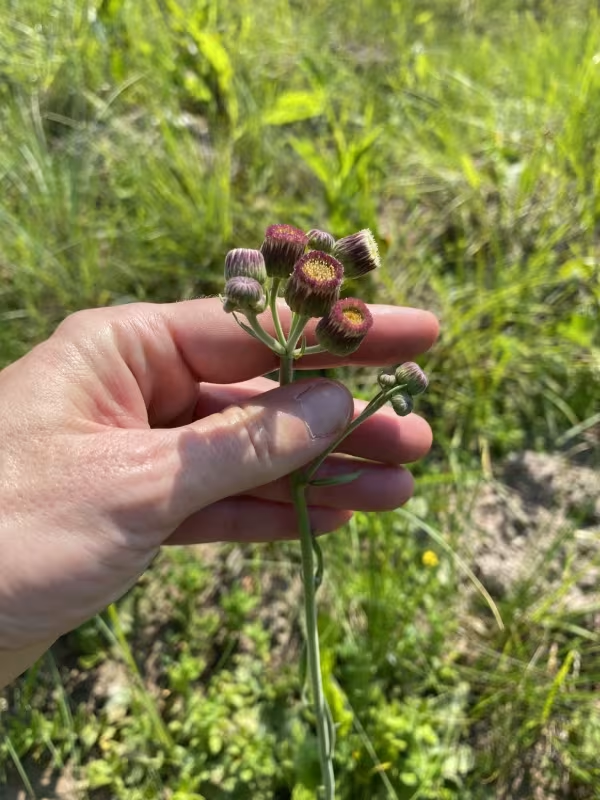
Description
Growing requirements
Conyza primulifolia is a herbaceous plant belonging to the Asteraceae family. It is distinct for its characteristic rosette of basal leaves, which provides the species with its specific scientific name, as the foliage arrangement closely resembles that of the genus Primula.
The plant originates from South America, with its primary distribution range extending across Brazil and Argentina. It typically inhabits moist meadows, floodplains, and areas with alluvial soils, where it can capitalize on high humidity levels and nutrient-rich substrates.
Regarding environmental requirements, the species favors open habitats with high solar radiation. While it is adaptable, it performs best in regions where moisture levels remain consistent throughout the growing season, as it lacks significant drought resistance traits.
Soil quality is a critical factor for the development of Conyza primulifolia. It prefers well-drained, loose, sandy-loam soils that prevent root rot while maintaining sufficient moisture retention. A neutral pH level is generally considered optimal for nutrient uptake in these populations.
Cultivation management involves ensuring the plant is free from dense competing vegetation, especially during the early rosette stage. Proper spacing and controlled irrigation are essential, as the plant relies on a stable microclimate to reach its full physiological maturity and reproductive phase.