
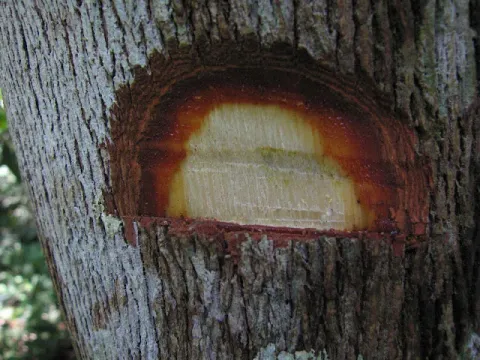
Coelocaryon
Coelocaryon
Coelocaryon is a genus of evergreen tropical trees belonging to the Myristicaceae family. These trees are native components of the lush rainforests of Western and Central Africa, where they play a vital role in the ecosystem.
What the section contains

Coelocaryon
Propagation is primarily achieved through seeds. In controlled cultivation settings, seeds require high humidity and warm temperatures to successfully germinate, mimicking the natural conditions of the forest floor.
The optimal sowing time in nursery environments is typically synchronized with the start of the wet season, ensuring that young seedlings have sufficient time to establish strong root systems before the drier months.
Seedlings are usually ready for field transplantation after reaching an age of 6 to 12 months. At this stage, they are more resilient to the stresses of relocation and environmental fluctuations.
Given its growth habits, Coelocaryon is increasingly utilized in agroforestry systems. Integrating these trees into existing forest landscapes helps maintain the necessary microclimate for their healthy development.
Coelocaryon trees have specific environmental needs, thriving primarily in humid tropical climates. They require a region with consistent annual rainfall, ideally exceeding 2000 mm, to support their continuous growth.
The soil must be fertile, deep, and possess excellent drainage properties. While the plant loves water, stagnant conditions can be fatal, making proper soil management and drainage essential in plantation settings.
Temperature is a critical factor for this species; it requires a stable, warm environment, typically ranging between +24°C and +30°C throughout the year. Cold sensitivity is high, and any frost can be detrimental.
Young Coelocaryon trees show significant shade tolerance, which allows them to be grown in multi-layered canopy systems. However, mature trees require more sunlight to reach their full potential and biomass production.
Soil health is enhanced by the presence of organic matter. The use of natural mulching techniques helps preserve soil moisture and promotes the symbiotic relationships between the tree roots and soil microorganisms.
The primary economic output of Coelocaryon is its timber. The yield is measured by the quality and volume of the wood produced over long-term growth cycles, as the trees exhibit a moderate growth rate.
Fruit and seed production, while possible, holds secondary significance compared to timber. In some regions, seeds may be harvested for their oil content, though this is not a major industrial practice.
Plantation density is key to maximizing yield. Proper spacing ensures that trees develop straight, high-quality trunks, which are highly sought after for various woodworking and construction purposes.
Biological productivity is closely tied to consistent water availability. During years of severe drought, the biomass accumulation rate decreases, highlighting the importance of site selection near reliable water sources.
As a long-term investment, Coelocaryon provides a stable source of wood mass. With minimal intervention after the initial establishment phase, these trees can yield valuable resources for many decades.
Fungal infections represent the most significant threat to Coelocaryon, especially in areas with poor ventilation and high humidity. These pathogens can cause severe bark decay and root rot.
Wood-boring insects are another major concern, as their activity can drastically reduce the commercial value of the timber by creating tunnels and allowing for secondary bacterial and fungal infections.
Weed and vine competition can stifle the growth of young trees during their first years of establishment. Regular weeding and canopy management are vital to ensure that seedlings receive adequate resources.
Human activities, such as unsustainable logging or illegal extraction, pose a severe risk to the longevity of the population. Proper regulation and ethical harvesting methods are required for long-term survival.
On degraded soils, the lack of specific mycorrhizal fungi can hinder plant development. Inoculating the soil with local forest substrate can help alleviate nutrient uptake issues in artificially created plantations.
Harvesting Coelocaryon is performed through selective logging. This sustainable method ensures that the forest structure is maintained and that younger generations have the space to grow.
The felling technique requires precision to minimize damage to the surrounding flora. It is best to conduct harvesting operations during the drier seasons to improve accessibility and transport of the logs.
Primary processing, including debarking and trimming, is often carried out directly at the site of harvest. This helps reduce weight and protects the wood from pests before it is transported to mills.
Seed collection for restoration or nursery planting is done by hand as soon as the fruits mature. Rapid processing is necessary because the seeds have a short shelf life and can be damaged by ground insects.
Effective logistics are critical for plantations in remote locations. Planning transport routes, including the potential use of river systems or specialized machinery, is essential for a successful harvest operation.