
Clivia nobilis
Clivia nobilis
Description
Growing requirements
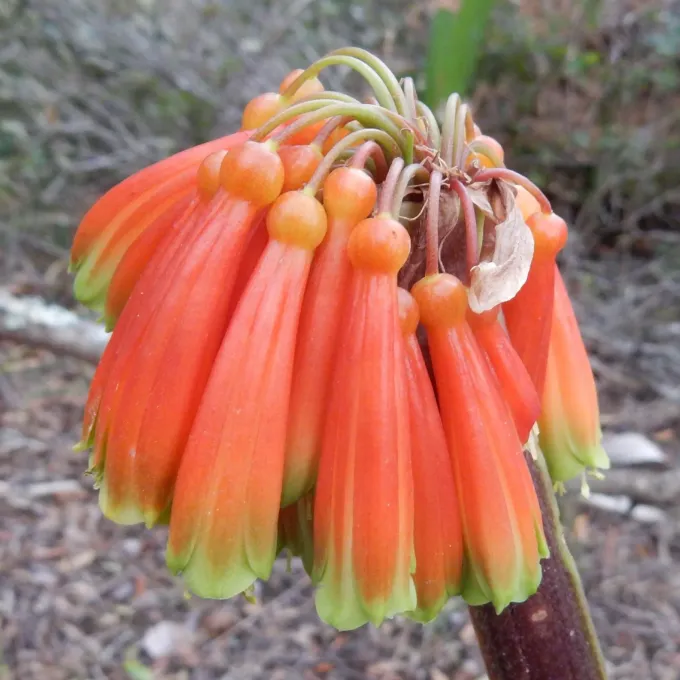
Clivia nobilis is a perennial evergreen plant belonging to the Amaryllidaceae family. It is recognized for its dark, strap-shaped leaves and distinctive drooping, tubular orange flowers tipped with green, which make it a highly sought-after decorative species.
The plant originates from the coastal forests of South Africa, where it thrives in shaded environments. In cultivation, it requires indirect light as its leaves are sensitive to intense UV exposure, which can lead to severe tissue damage and necrosis.
The substrate for Clivia should be porous and well-draining to ensure aeration of the fleshy root system. A mixture of loam-based compost with added perlite or coarse bark provides the necessary structure to prevent compaction and waterlogging.
Agricultural management requires a clear distinction between growth and dormancy cycles. During the active phase, regular watering and balanced fertilizer applications are necessary, while during winter, the plant must be kept dry and cool to initiate blooming.
The temperature range should be carefully monitored: while the plant tolerates moderate heat, a cool period of 10–15 degrees Celsius for several weeks during winter is essential for successful inflorescence development and overall plant health.
Main diseases and pests
Mealybugs are the most common pests affecting Clivia nobilis, often hiding in the crevices between leaf bases. These insects secrete a waxy substance and feed on plant sap, necessitating the use of systemic insecticides or manual removal with alcohol.
Root rot caused by Phytophthora or Pythium species is a fatal threat if the potting mix remains too moist. Proper drainage is the primary defense, as established root rot is often irreversible and requires aggressive intervention or propagation from healthy offsets.
Scale insects present a similar challenge, attaching themselves to the leaves and draining nutrients. Their hard shells provide protection against many contact sprays, making targeted applications necessary to control their population effectively.
Fungal leaf spots can occur when air circulation is poor and humidity levels are excessively high. Improving ventilation and avoiding overhead watering helps to keep the foliage dry and free from opportunistic pathogens that cause unsightly lesions.
Red spider mites may appear during dry summer months or in indoor environments with low humidity. Regular misting and the application of appropriate acaricides are effective measures to keep the foliage clean and healthy throughout the year.