
Clivia gardenii
Clivia gardenii
Description
Growing requirements
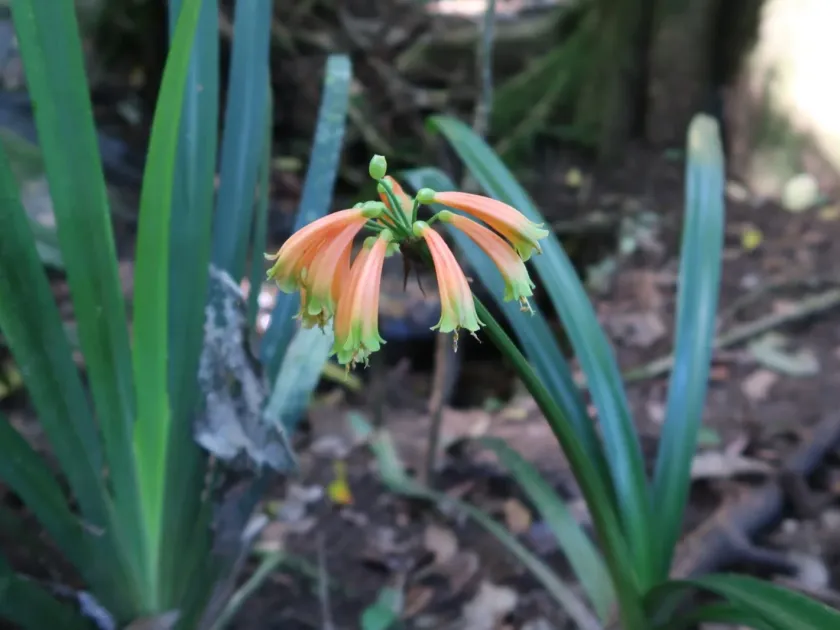
Clivia gardenii is a distinct species belonging to the Amaryllidaceae family. It is recognized by its gracefully arching leaves and clusters of tubular, drooping flowers that appear in shades of orange or yellow with green tips.
This species originates from the shaded woodland areas of South Africa, specifically in the KwaZulu-Natal region. Its natural habitat is characterized by filtered light and constant air humidity, making it an ideal choice for semi-shaded interior environments.
Optimal growth requires a well-draining, nutrient-rich potting medium. A mixture based on peat, perlite, and pine bark is typically recommended to prevent root compaction and ensure proper aeration of the root system.
The plant thrives under specific climatic conditions, requiring a distinct period of coolness during the winter months. Exposure to temperatures around 12–15°C for several weeks is critical to trigger the flowering cycle in the spring.
Agrotechnical practices involve careful irrigation, ensuring the substrate dries out sufficiently between waterings. Fertilization should be focused on the active growth period, using balanced liquid fertilizers applied every four to six weeks.
Main diseases and pests
Common pests affecting Clivia gardenii include mealybugs and scale insects. These pests often congregate in leaf axils, necessitating regular inspections and the application of horticultural oils or targeted systemic insecticides.
Root rot is the most serious threat, typically resulting from overwatering or inadequate soil drainage. If the leaves start to yellow and lose turgor despite soil moisture, the root system should be inspected immediately and repotted.
Fungal leaf spot diseases can emerge if the environment is too humid without sufficient airflow. Improving ventilation and keeping the foliage dry helps to mitigate these risks significantly during the warmer months.
Slugs and snails may damage the plants if kept outdoors in shady garden areas. Protective barriers or organic baiting methods are effective ways to prevent physical damage to the leaves and developing flower stems.
While relatively resistant to major agricultural diseases, the plant is susceptible to virus infections which cause irregular mottling on leaves. Infected plants should be isolated and handled with care to prevent the spread of pathogens.