
Clivia caulescens
Clivia caulescens
Description
Growing requirements
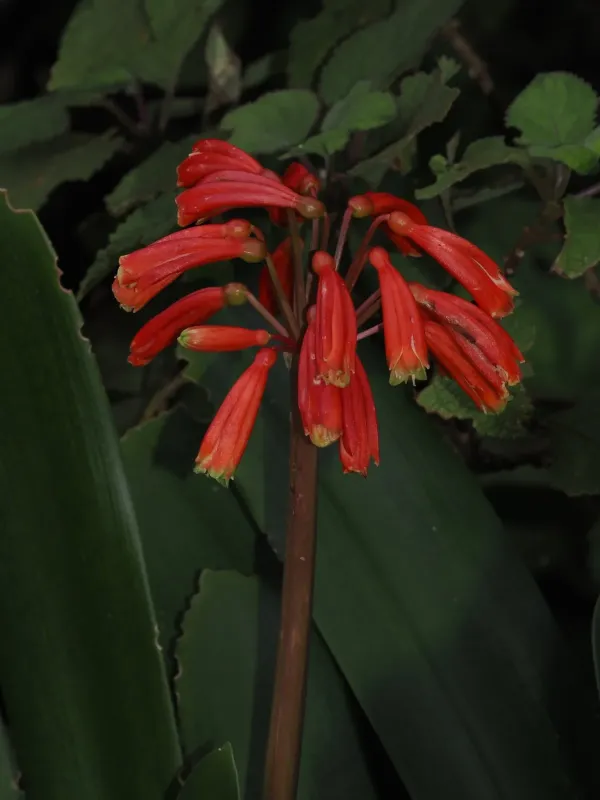
Clivia caulescens is a distinct perennial plant species within the Amaryllidaceae family. Unlike the more common rosette-forming Clivia miniata, this species develops a noticeable, elongated stem, which makes it a fascinating subject for specialized ornamental plant collections.
The plant is native to the forested regions of South Africa, where it typically grows as an epiphyte or on the mossy forest floor. Because of its natural habitat, it thrives in environments characterized by filtered light and relatively high atmospheric humidity.
Cultivation requires a well-draining, organic-rich substrate, such as a mix of orchid bark, peat moss, and coarse perlite. This mimics its natural epiphytic environment, allowing the fleshy roots to access oxygen while retaining sufficient moisture for the plant's metabolic needs.
Temperature management is crucial; the plant performs best in moderate conditions ranging from 18 to 22 degrees Celsius. During the winter months, a cooling period with temperatures between 12 and 15 degrees Celsius is essential to trigger the development of its unique hanging flower spikes.
Watering should be managed with caution, especially during the dormant season. The substrate should be allowed to dry slightly between waterings, as the plant's succulent-like roots are highly susceptible to rot if left in waterlogged, anaerobic soil conditions.
Main diseases and pests
Common pests affecting Clivia caulescens include mealybugs, scale insects, and sometimes spider mites. These pests tend to congregate in the tight crevices between the leaf bases and along the stem, necessitating regular inspections and prompt treatment with insecticidal soap or neem oil.
Pathogenic fungi pose the most significant threat, particularly in poorly ventilated or excessively damp conditions. Stagonospora curtisii, often called red blotch, can cause unsightly lesions on the leaves, requiring the removal of infected plant parts and the application of appropriate copper-based fungicides.