
Clethra fargesii
Clethra fargesii Franch.
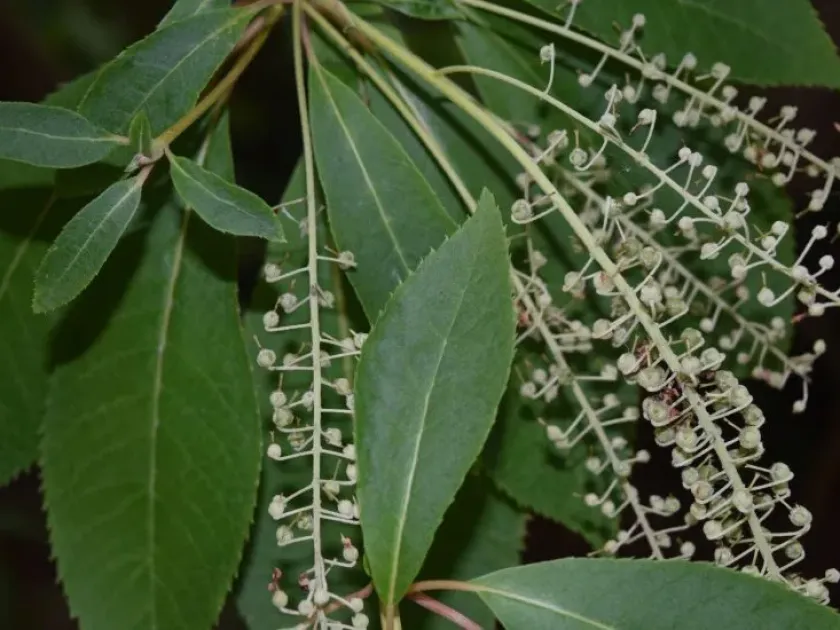
Description
Growing requirements
Clethra fargesii is a deciduous shrub species belonging to the Clethraceae family. It is highly valued for its striking upright racemes of fragrant white flowers that bloom in the summer, providing visual interest to any garden.
Native to central and western China, this species thrives in forest margins and mountainous environments. It is characterized by its slender, elegant stems and lush foliage that turns beautiful shades during the autumn season.
Cultivation requires acidic, moisture-retentive, and humus-rich soil. It is essential to ensure that the site has excellent drainage, as the roots are sensitive to waterlogging, yet they must not be allowed to dry out completely.
The plant performs best in a sheltered position with partial shade. Intense, direct sunlight during the hottest part of the day can scorched the leaves, so protection from midday heat is highly recommended.
In colder climates, mulching the root zone with pine needles or bark is crucial for winter survival. This not only insulates the roots but also helps maintain the soil's acidity level, which is vital for the plant's nutrient uptake.
Main diseases and pests
The primary health issues for Clethra fargesii are often linked to improper soil conditions, particularly pH imbalance. Chlorosis is a common disorder, characterized by yellowing leaves due to the plant's inability to absorb iron from non-acidic soil.
Root rot is another significant threat, typically caused by stagnant water in the root zone. Ensuring a well-draining substrate is the most effective preventative measure against fungal pathogens.
Pests such as spider mites can infest the foliage during periods of prolonged drought. Monitoring plant health and providing adequate irrigation during dry spells are key to keeping the shrub vigorous.
Occasionally, scale insects may appear on the stems. If detected, manual removal or the application of horticultural oils is usually sufficient to manage the population without damaging the shrub.
Proper pruning practices should be followed to remove dead or diseased branches. This encourages better airflow within the canopy and reduces the micro-environmental risk of fungal infection development.