
Circaea repens
Circaea repens
Description
Growing requirements
Circaea repens, commonly known as an enchanter's nightshade relative, is a perennial herb belonging to the Onagraceae family. This species is distinguished by its creeping rhizomes, which allow the plant to spread across the forest floor and form dense colonies in stable environments.
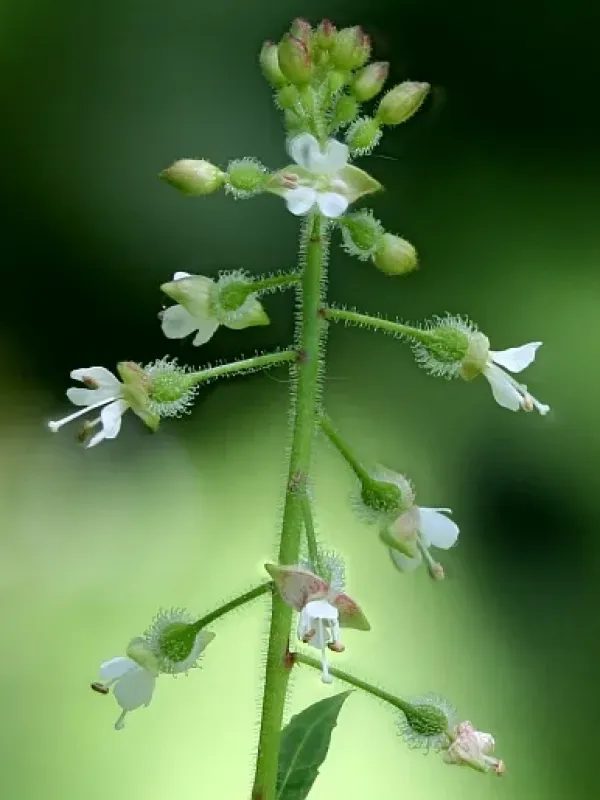
Botanically, the plant is characterized by thin, erect stems and opposite leaves. Its most distinctive feature is the small, delicate flower consisting of only two petals, which provides the genus with its scientific name and unique evolutionary appearance within the family.
The plant thrives in moist, shaded conditions typical of temperate forest ecosystems. It requires rich, humus-filled soil that retains moisture throughout the growing season, as it lacks the physiological adaptations necessary to survive in arid or high-light environments.
Optimal growth is achieved in areas with cool, stable microclimates. The plant performs best in locations where it is protected from direct sun exposure, which can easily damage its leaves and cause rapid evaporation of moisture from the thin, shallow root system.
Propagation occurs primarily through vegetative means, with the underground rhizomes extending outward to colonize new ground. This method makes the plant highly effective at maintaining its presence within a stable forest habitat where space is not dominated by more aggressive species.
Main diseases and pests
The main threats to Circaea repens are environmental disturbances that alter soil moisture or light levels. Activities such as logging or deforestation significantly reduce the canopy cover, leading to the desiccation of the forest floor, which is lethal to this moisture-dependent species.
Pathogen risks include fungal infections that manifest in high-humidity, low-airflow conditions. Root rot can become a critical issue if the substrate becomes waterlogged or if there is insufficient drainage, leading to the decay of the creeping rhizome system.
When grown in non-native settings, the plant can be susceptible to competition from invasive weeds. Because of its relatively slow growth and delicate structure, it cannot easily compete for resources if the surrounding vegetation is not managed correctly by the grower.
Preventative care is essential for maintaining a healthy population. Growers should prioritize the creation of a naturalistic environment that mimics the forest floor, using organic mulch to help regulate temperature and preserve the necessary soil hydration levels.
Although the plant is generally resistant to many common agricultural pests, monitoring for occasional leaf-feeding insects or spider mites during periods of uncharacteristic heat is advised. Maintaining overall soil health remains the most effective defense against potential stressors.