
Intermediate enchanter's nightshade
Circaea intermedia
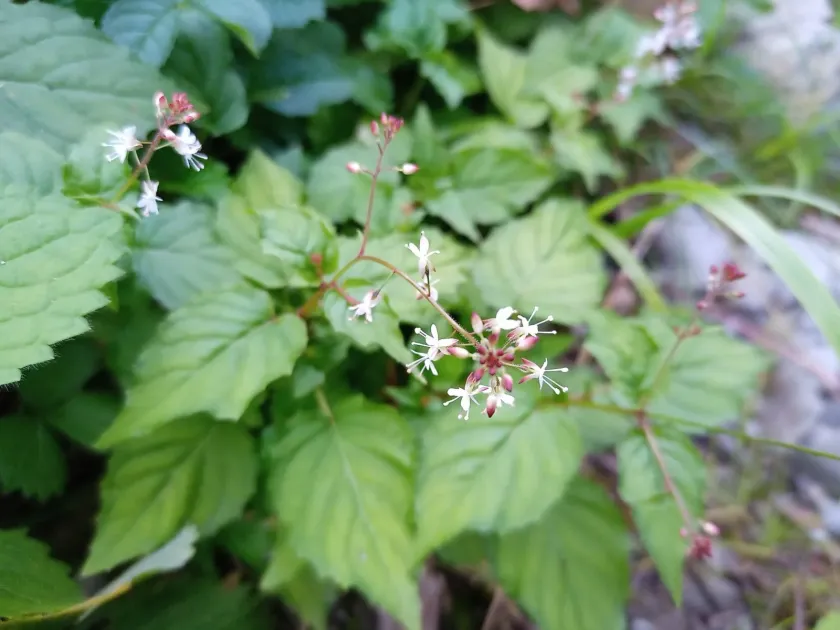
Description
Growing requirements
Intermediate enchanter's nightshade (Circaea intermedia) is a herbaceous perennial plant belonging to the Onagraceae family. It is a natural hybrid species commonly found in the forest ecosystems of Europe.
The plant thrives in moist, nutrient-rich soils typically found in shaded woodland environments. It is highly adapted to low-light conditions and does not tolerate direct solar radiation well.
Climate requirements include stable moderate temperatures and high atmospheric humidity. It is sensitive to drought, which can significantly restrict its vegetative development during the summer season.
Botanically, it is characterized by creeping rhizomes that facilitate rapid spread through the soil. The stems are upright, and the leaves are arranged in opposite pairs, exhibiting a distinct lanceolate to ovate shape.
While not a major commercial crop, the plant holds value in ecological restoration and botanical study due to its specific habitat requirements and role in forest soil stabilization.
Main diseases and pests
The plant is susceptible to various fungal pathogens, especially in environments where air circulation is poor and humidity levels remain constantly high.
Gastropods, such as slugs and snails, represent the most significant pest threat, capable of consuming significant portions of the foliage in shaded, damp garden or forest patches.
Aphids often target the young inflorescences and tender stems, potentially stressing the plant and reducing its overall vigor during the growing phase.
Root rot caused by stagnant water is a major risk factor when cultivation conditions are not properly drained, leading to decay of the rhizomatous system.
Management strategies involve ensuring proper soil drainage and periodic monitoring to prevent the spread of diseases, particularly in dense, naturally formed clusters.