
Chrysothamnus paniculatus
Chrysothamnus paniculatus
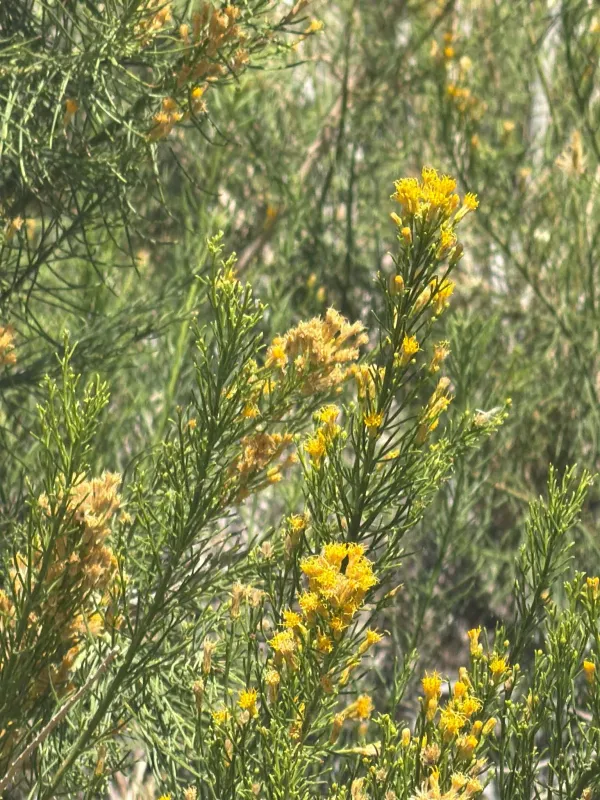
Description
Growing requirements
Chrysothamnus paniculatus is a perennial shrub belonging to the Asteraceae family. Known commonly as a species of rabbitbrush, it is highly adapted to extreme arid environments and harsh desert climates.
The plant originates from the arid regions of the Southwestern United States. It thrives in well-drained, sandy, or rocky soils, demonstrating remarkable tolerance to low nutrient levels and high soil salinity.
Botanically, the species is characterized by deep root systems and specialized foliage that reduces water loss through transpiration. These adaptations allow the plant to survive in regions where most agricultural crops would perish.
Climatic requirements focus on high solar radiation and low moisture levels. It is a highly drought-tolerant shrub that shows significant resilience to both high summer temperatures and winter frost cycles.
Agronomic management involves maintaining appropriate spacing between plants to maximize resource efficiency. Due to its natural adaptation, the plant requires minimal fertilization and irrigation, making it suitable for low-input farming systems.
Harvesting
The primary agricultural interest in Chrysothamnus paniculatus lies in its potential as a source of natural rubber and resins. Research highlights its chemical properties as a sustainable alternative in industrial applications.
Harvesting is typically conducted at the end of the growing season when biomass accumulation is at its peak. Mechanical harvesting techniques are used to collect the aerial parts of the shrub for industrial extraction.
Post-harvest processing involves drying and grinding the plant material to facilitate the separation of rubber polymers. Maintaining a controlled environment during processing is vital to preserve the quality of the extracted compounds.
Beyond its industrial value, the plant serves as a vital tool for soil stabilization and land reclamation in degraded arid zones. It helps prevent soil erosion, improving the ecological state of the cultivation area.
Future agricultural potential depends on selective breeding to improve rubber content yield. As a niche crop, Chrysothamnus paniculatus represents an important area of study for climate-resilient agriculture.