
Littleleaf mountain mahogany
Cercocarpus intricatus
Description
Growing requirements
Littleleaf mountain mahogany (Cercocarpus intricatus) is a slow-growing evergreen shrub belonging to the Rosaceae family. Native to the mountainous regions of the Western United States, it is widely recognized for its high degree of drought tolerance and ability to thrive in challenging environments.
The plant requires well-draining, gravelly, or rocky soil to survive. It is an obligate calcicole in many areas, preferring alkaline substrates. Poor drainage is the most significant limiting factor, as the roots are highly susceptible to rot in saturated or heavy clay soils.
Regarding climatic demands, this shrub thrives in regions with intense solar radiation and minimal rainfall. It is perfectly adapted to the wide temperature fluctuations characteristic of high-desert climates, exhibiting excellent cold hardiness throughout its native range.
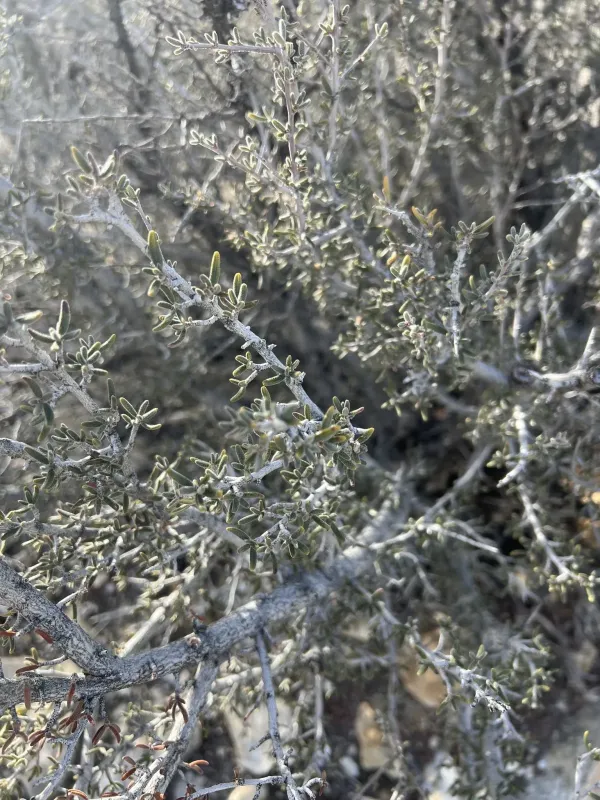
Botanically, it features stiff, intricately branched stems that form a dense, compact habit. The leaves are small, leathery, and often curled at the margins, which serves as an adaptation to reduce transpiration in extremely hot and dry weather conditions.
In agricultural and landscaping contexts, it is prized for xeriscaping and soil stabilization. It acts as a foundational plant in dry garden designs, providing year-round structure and texture without the need for supplemental irrigation once established.
Main diseases and pests
The primary threat to the health of the littleleaf mountain mahogany is phytophthora root rot, which typically develops in sites with poor soil aeration. Preventing prolonged soil saturation is the most effective management strategy against this lethal condition.
Insect pests, including aphids and various species of scale, may occasionally feed on young growth during the spring flush. While usually not fatal to mature plants, these infestations should be monitored to prevent stunted growth and secondary viral infections.
Fungal leaf spots can occur in environments with high humidity or poor air circulation. Thinning the canopy by removing dead or crossing branches promotes better airflow and reduces the likelihood of pathogen development during wet spells.
Winter injury, although infrequent, may occur during sudden freeze-thaw cycles. Damage to the bark can create entry points for opportunistic pathogens; therefore, physical protection of the main stem is recommended in extreme climates.
Effective management requires a proactive approach centered on site selection rather than chemical intervention. By providing the plant with the arid conditions it naturally evolved to inhabit, most disease and pest issues are largely mitigated.