
Silver mountain mahogany
Cercocarpus argenteus
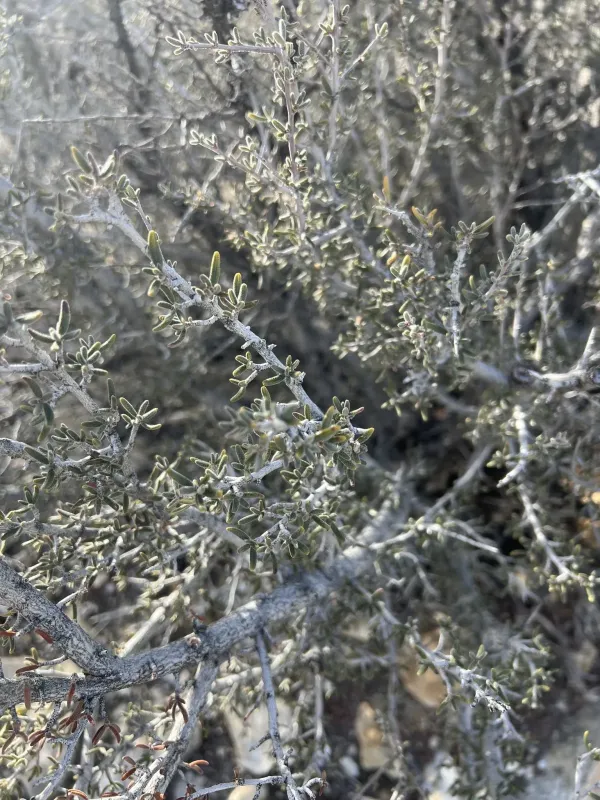
Description
Growing requirements
Cercocarpus argenteus, known as silver mountain mahogany, is a perennial shrub belonging to the Rosaceae family. It is native to the arid mountainous regions of North America, where it thrives in challenging ecological conditions.
The plant is highly valued for its exceptional drought tolerance and slow growth rate. Its distinctive silver-toned leaves are an evolutionary adaptation that reflects sunlight and reduces transpiration, allowing it to survive in desert climates.
Regarding soil requirements, the species necessitates well-drained, porous media. It is highly intolerant of wet feet, so planting in rocky or sandy substrates with excellent aeration is essential to prevent root decay.
Climate adaptability is one of its primary strengths. The shrub prefers full sun exposure and is capable of withstanding significant temperature fluctuations, typical of its native high-elevation habitats.
In terms of horticulture, it is increasingly used in xeriscaping and sustainable landscape design. Its longevity and structural stability make it an ideal choice for low-maintenance areas where water conservation is a priority.
Main diseases and pests
Fungal pathogens associated with overly moist soil represent the primary threat to the health of Cercocarpus argenteus. Root rot can quickly destroy even established specimens if drainage is not strictly maintained.
Insect pests, such as aphids and leaf-chewing beetles, may occasionally infest new shoots during the spring growth phase. Monitoring the plants during this period is recommended to keep pest populations at a manageable level.
Nutrient deficiencies, particularly iron or manganese chlorosis, can occur if the soil pH is not suitable for the plant's metabolic needs. Proper testing and adjustment of soil chemistry are necessary for vigorous growth.
Mechanical damage from wildlife or improper pruning can create entry points for pathogens. Clean cutting techniques are mandatory to ensure the plant can successfully seal off wounds and maintain its structural integrity.
Competition from invasive weeds can impede the development of young shrubs. Implementing mulch layers around the root zone helps retain minimal moisture and suppresses unwanted vegetation during the establishment phase.