
Cercocarpus breviflorus
Cercocarpus breviflorus
Description
Growing requirements
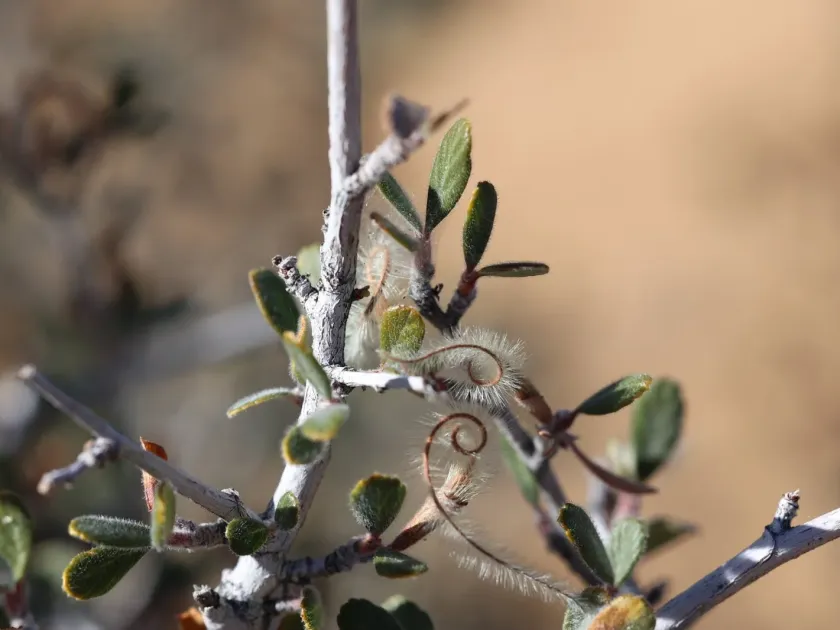
Cercocarpus breviflorus, commonly known as mountain mahogany, is a resilient evergreen shrub or small tree belonging to the Rosaceae family. Native to the southwestern United States and northern Mexico, it is highly adapted to arid and semi-arid environments.
The plant thrives in well-drained, rocky, or sandy soils with poor nutrient profiles, where it exhibits remarkable tolerance to drought. It requires full sunlight to maintain its structural integrity and health, as shaded conditions significantly impede its development.
Botanically, this species is noted for its leathery leaves, which reduce transpiration, and an extensive root system that enables it to survive extreme water scarcity. It also functions as a nitrogen-fixing plant through symbiotic relationships, which aids in soil enrichment.
Cultivation practices should prioritize minimal irrigation once the plant is established. The species is highly valued in agroforestry for its ability to prevent soil erosion and its role in reclaiming disturbed or degraded lands.
Beyond its ecological value, the wood of Cercocarpus breviflorus is exceptionally dense and durable. It is traditionally used in high-quality woodworking and crafting, reflecting its long-standing cultural and economic significance in its native range.
Main diseases and pests
The primary agricultural threats to this plant are root rot diseases, typically exacerbated by waterlogged soil conditions. Proper site selection and drainage management are essential to prevent these fungal issues from compromising the plant's health.
Pest pressures include various leaf-feeding insects and aphids that may infest young shoots during the growing season. Furthermore, browsing by wildlife can be a significant management challenge, often necessitating the use of protective barriers for young saplings until they become sufficiently robust.