
Japanese cayratia
Cayratia japonica
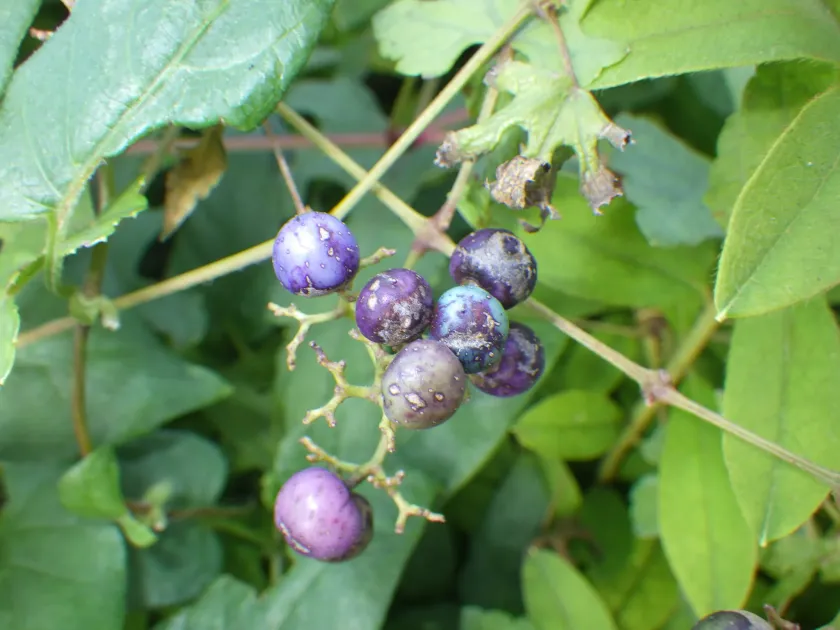
Description
Growing requirements
Japanese cayratia (Cayratia japonica) is a perennial herbaceous vine belonging to the Vitaceae family. It is characterized by its vigorous growth, utilizing tendrils to climb across vegetation, fences, and trellises within its environment.
Native to East and Southeast Asia, this species thrives in diverse habitats including woodland edges, riverbanks, and disturbed agricultural lands. It is well-adapted to warm, humid climates and is known for its ability to spread rapidly through underground rhizomes.
The plant requires well-drained, nutrient-rich soils and prefers partial shade to full sun. While it is adaptable, it performs best in moisture-retaining soils that support its continuous vegetative development throughout the growing season.
Managing this species requires significant labor, as its rhizomatous root system allows it to re-sprout easily after mechanical damage. Effective control usually involves deep tillage or the application of broad-spectrum systemic herbicides that penetrate down to the root structure.
Commercially, the plant is primarily harvested for its use in traditional medicine, where it is utilized for its anti-inflammatory and diuretic properties. However, in an agricultural context, it is largely classified as a weed that requires careful monitoring in field crops.
Main diseases and pests
Common fungal diseases affecting this plant include powdery mildew and anthracnose, which typically appear during periods of high humidity and restricted air circulation in the foliage.
Pest pressure is frequently observed from sap-sucking insects like aphids and spider mites, which can cause leaf chlorosis and weaken the plant's overall structural integrity.