
Seguin's chestnut
Castanea seguinii
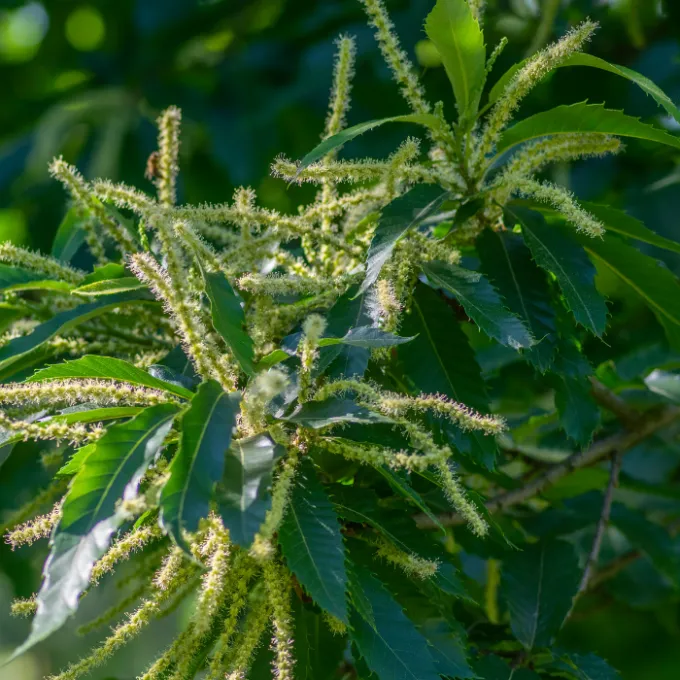
Description
Sowing dates
Seguin's chestnut (Castanea seguinii) is a species in the Fagaceae family, native to China. It is typically propagated by seeds, which should be sown immediately after collection or stratified to ensure high germination rates.
In nursery settings, seeds are sown in a loose, well-draining substrate at a depth of 5-8 centimeters. Maintaining consistent moisture without saturation is crucial for successful seedling development during the early spring months.
For large-scale cultivation, seedlings are often grafted onto hardy rootstocks. This technique helps in preserving superior genetic traits and shortening the time it takes for the tree to reach maturity.
Transplanting should occur early in the spring, before the buds start to swell, ensuring the root ball remains intact to minimize transplant shock and encourage quick establishment in the new location.
Proper spacing is essential; maintaining an interval of at least 3 to 4 meters between trees allows for optimal crown expansion, light penetration, and easier access for maintenance and harvest operations.
Growing requirements
This species thrives in a warm, humid climate and is well-adapted to mountainous regions. It requires well-drained, slightly acidic soil rich in organic matter to perform at its best.
Air circulation is vital for the health of the trees. Planting in areas with good wind movement helps prevent fungal diseases and ensures the tree receives adequate sunlight, which is necessary for fruit ripening.
Seguin's chestnut is somewhat sensitive to late spring frosts, which can damage emerging flowers and significantly impact the overall yield, so selecting a sheltered site is recommended for colder zones.
While the tree is relatively resilient once established, regular irrigation during the peak growing season is necessary, especially during fruit set, to ensure the nuts develop to their full potential size.
Fertilization with balanced nutrients, focusing on phosphorus and potassium, helps improve the tree's resilience and fruit quality, particularly when grown in soil that lacks inherent fertility.
Yield
Seguin's chestnut is highly valued for its early and prolific fruit production. Many trees start yielding a harvest within a few years of planting, making it an economically attractive species for small orchards.
The nuts of this species are smaller compared to European chestnuts but are prized for their excellent, sweet flavor and high nutritional content, being rich in carbohydrates and minerals.
Productivity increases steadily as the tree matures. Optimal management, including pruning to allow sunlight into the center of the tree, can significantly maximize the volume of harvested nuts.
Cross-pollination is generally required to achieve a heavy fruit set. Planting multiple varieties or specimens in close proximity is a key strategy for increasing the success rate of fertilization.
Commercial harvest yields are typically measured by weight, and through intensive orchard management, growers can achieve consistent production levels that meet market demands for gourmet nut products.
Main diseases and pests
The chestnut gall wasp is a primary concern for growers, as it can cause significant damage by inducing gall formation on shoots, effectively reducing tree vigor and harvest volumes.
Phytophthora root rot poses a severe threat, particularly in soils with poor drainage. Once infected, trees can decline rapidly, making soil health and water management the first line of defense.
Powdery mildew often appears during periods of high humidity and poor ventilation. Keeping the canopy open through regular pruning is a proactive step to reduce the risk of infection.
Bark-boring insects can create entry points for secondary fungal infections. Regular inspections of the trunk and branches allow for early detection and intervention before damage becomes irreparable.
- Perform annual winter pruning for crown clearance.
- Monitor the canopy for signs of gall wasp or mildew.
- Apply preventative fungicide sprays if environmental conditions favor disease.
Harvesting
Harvesting usually takes place in autumn. The process begins when the spiny burs (the outer husks) split open, and the mature nuts drop naturally to the forest floor or orchard soil.
For efficient collection, keeping the orchard floor clear of dense brush and fallen leaves is essential, as this makes the nuts easily visible and accessible for hand or mechanical gathering.
Post-harvest care is critical; nuts must be cured in a cool, dry, and well-ventilated space to reduce moisture content and prevent the development of mold, which could ruin the entire batch.
Storage of Seguin's chestnuts requires precise temperature control, typically near freezing, to maintain nut freshness and sweetness over several months, ensuring high-quality products for customers.
Grading and sorting by size after harvest allows producers to present a uniform product, which can command higher market prices and build brand reputation for excellence in the nut trade.