
Allegheny chinkapin
Castanea pumila
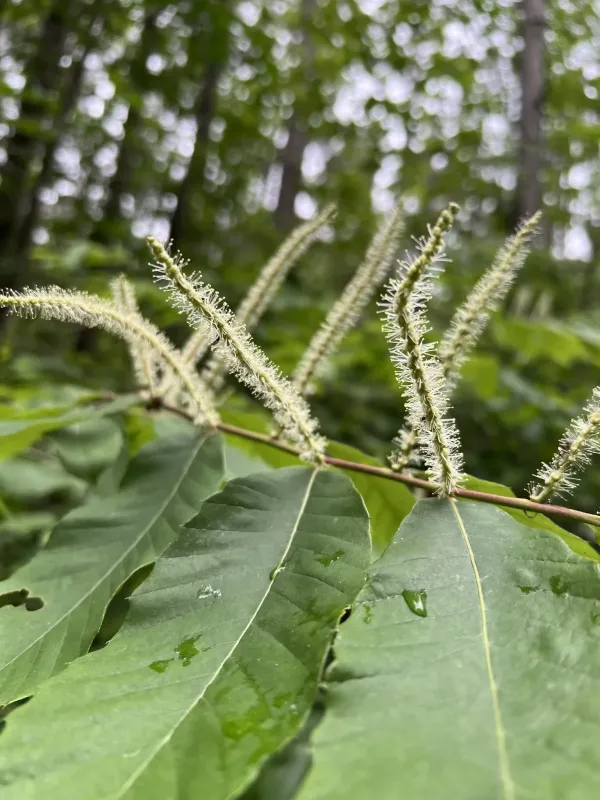
Description
Sowing dates
Planting seeds of the Allegheny chinkapin is best performed in the fall, immediately after harvest, to allow for natural stratification in the soil.
For spring sowing, seeds require cold stratification for 60 to 90 days at temperatures ranging from 1 to 5 degrees Celsius to break dormancy.
Seeds should be planted at a depth of 3 to 5 centimeters in well-draining soil, ensuring that the ground remains moist but not waterlogged during the germination phase.
Seedlings emerge in the spring once soil temperatures rise, requiring protection from early spring frosts and adequate moisture for initial establishment.
When starting in a nursery, it is recommended to use deep pots to accommodate the plant's developing taproot, which is crucial for long-term health.
Growing requirements
The Allegheny chinkapin belongs to the Fagaceae family, typically growing as a dense deciduous shrub or a small tree reaching 2 to 5 meters in height.
This species thrives in well-drained, slightly acidic sandy or loamy soils and is known for its ability to grow on relatively poor or rocky sites.
Full sun is essential for the plant to reach its maximum productivity, as shading significantly reduces the number of catkins and subsequent fruit set.
The plant is highly adaptable to various climatic conditions and exhibits strong winter hardiness, making it suitable for a wide range of temperate environments.
Soil pH should ideally be maintained between 5.5 and 6.5 to ensure optimal nutrient uptake and prevent chlorosis, which can occur in overly alkaline soils.
Yield
Allegheny chinkapins usually begin producing nuts at a young age, often between 3 and 5 years, providing an early return on the initial investment.
A mature shrub can produce between 2 and 5 kilograms of nuts, although yields can fluctuate based on local pollinator activity and weather conditions.
The nuts are small, sweet, and highly valued for their flavor, contained within a single-seeded, spiny burr that opens upon ripening in late summer.
Interplanting multiple specimens is recommended to encourage cross-pollination, which consistently results in higher yields and larger, well-filled kernels.
Good cultural practices, including consistent irrigation during fruit development and mulching, help maintain stable annual yields even during dryer seasons.
Main diseases and pests
The chestnut gall wasp is a significant pest that creates galls on new growth, potentially reducing plant vigor and overall fruit production over time.
Fungal issues such as powdery mildew may develop if the plants are placed in areas with poor airflow and high humidity during the growing season.
Chestnut blight is a serious concern for all Castanea species, requiring constant vigilance and the removal of any diseased or cankered wood immediately.
Weevils can infest the developing nuts, so orchardists often employ integrated pest management strategies to protect the crop before the harvest period.
Sanitation, such as clearing leaf litter and pruning infected branches, is the most effective strategy for reducing the pressure of diseases and pests.
Harvesting
Harvesting should occur as soon as the spiny burrs turn brown and begin to split, revealing the dark, glossy, and sweet nuts inside the casing.
Since nuts fall to the ground when fully ripe, frequent harvesting is necessary to prevent them from becoming contaminated by soil moisture or pests.
After collection, it is vital to dry the nuts in a cool, ventilated area to lower their moisture content, which prevents spoilage and mold growth.
Properly dried nuts can be stored in breathable mesh bags in a cold environment, allowing for extended shelf life throughout the winter months.
Avoid storing nuts in sealed plastic containers, as trapped moisture will rapidly lead to fermentation and loss of quality within a short period.