
Cassinia vauvilliersii
Cassinia vauvilliersii
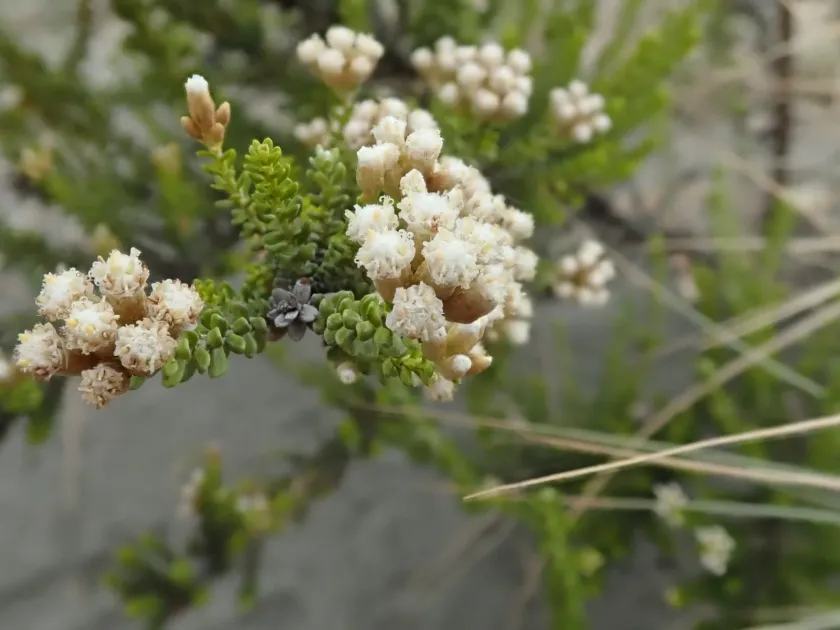
Description
Sowing dates
Cassinia vauvilliersii is typically propagated through seeds or semi-hardwood cuttings during the transition of seasons.
For seed germination, it is essential to provide a well-draining seed-starting mix and maintain consistent warmth.
Cuttings should be taken in late summer, utilizing a rooting hormone to encourage healthy development before winter dormancy.
Providing a light, airy environment for young plants ensures that they develop a strong root system during their initial growth phase.
Regular monitoring of moisture levels in the propagation tray is crucial to prevent damping-off diseases during the first few weeks.
Growing requirements
This species belongs to the Asteraceae family and is native to the subalpine regions of New Zealand.
It thrives in full sun exposure, which is necessary for the development of its characteristic foliage and overall health.
The plant requires soils with exceptional drainage, as it is highly susceptible to root decay in waterlogged conditions.
It prefers acidic to neutral, gritty soils that mimic its natural rocky, mountainous habitat.
While relatively hardy, the plant benefits from protection against harsh, desiccating winter winds in non-native climates.
Main diseases and pests
The most common threats to Cassinia vauvilliersii include fungal pathogens associated with poor drainage and high humidity.
Root rot remains the primary concern, often appearing when the soil compaction prevents adequate aeration.
Insect pests, such as aphids and mites, may infest new growth during the spring flush, requiring targeted treatment.
Effective management includes pruning away dead or overcrowded branches to improve air circulation within the shrub.
Applying appropriate horticultural oils or systemic insecticides can effectively mitigate pest pressure during the growing season.