
Cassinia leptophylla
Cassinia leptophylla
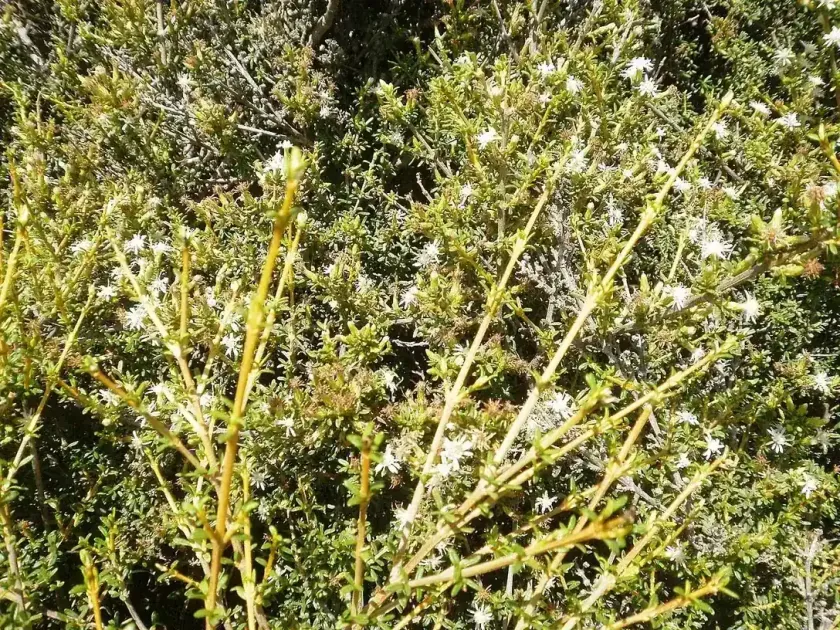
Description
Growing requirements
Cassinia leptophylla, often known as the silver tea tree or golden cottonwood, is a hardy evergreen shrub belonging to the Asteraceae family. It is native to New Zealand, where it thrives in exposed coastal environments.
The plant is best known for its dense, silvery-grey foliage, which provides a striking color contrast in ornamental landscapes. Its small leaves are tightly packed along the stems, giving the shrub a unique textured appearance.
Cultivation requires full sun exposure to maintain its compact habit and vibrant leaf color. Planting in partial shade often leads to sparse foliage and the loss of its characteristic silver sheen.
Soil drainage is the most critical factor for success. This plant demands gritty, well-draining soil and will quickly decline if planted in heavy, waterlogged clays.
The plant is highly tolerant of wind and salt spray, making it an excellent candidate for coastal shelterbelts or decorative hedges in maritime climate zones.
Main diseases and pests
Root rot, specifically caused by Phytophthora species, is the primary threat to Cassinia leptophylla. It is almost always fatal if drainage is not optimized.
Spider mites are common pests, particularly during hot, dry summer months. They suck sap from the foliage, causing it to appear discolored and stressed.
Powdery mildew can occur if the plant is grown in areas with high humidity and poor airflow. Maintaining good spacing between plants is essential for prevention.
Scale insects may occasionally infest the stems, requiring manual removal or the application of horticultural oils for effective control.
Overall, pest management is relatively simple if the plant is sited in a position that matches its physiological needs, focusing primarily on avoiding excessive humidity.