
Cassinia quinquefaria
Cassinia quinquefaria
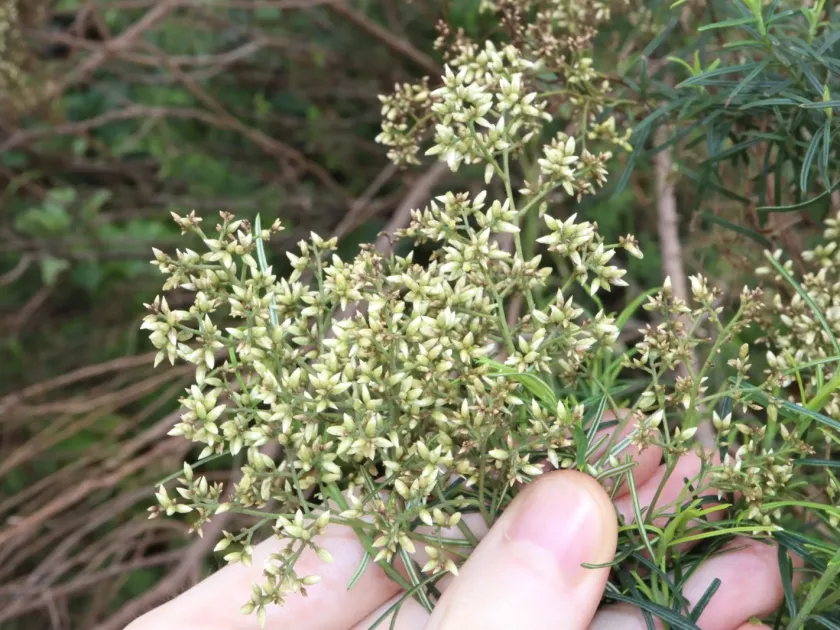
Description
Growing requirements
Cassinia quinquefaria is an evergreen perennial shrub belonging to the Asteraceae family. Native to the eastern regions of Australia, this plant is commonly found in dry sclerophyll forests and rocky landscapes, demonstrating remarkable adaptability to harsh environments.
The plant features upright, woody stems that can grow up to two meters tall. Its narrow, linear leaves are distinct for their dense, pale-colored tomentum on the underside, which provides a shimmering effect and makes the foliage highly ornamental in garden settings.
For optimal growth, this species requires well-drained sandy or loamy soils. It is naturally adapted to dry conditions and prefers locations with full sun exposure to maintain its compact and healthy growth habit throughout the year.
Agricultural management of Cassinia involves minimal maintenance, provided the soil is not prone to waterlogging. It is highly suitable for areas with low rainfall, making it an excellent choice for sustainable and water-wise landscaping projects.
Beyond its aesthetic appeal, the plant is valued for its role in soil stabilization. Its root system helps in preventing erosion on slopes, while its dense branching habit provides excellent shelter for local fauna, contributing to biodiversity in native gardens.
Main diseases and pests
The primary threat to the health of Cassinia quinquefaria is poor drainage. Excess moisture around the root zone quickly leads to root rot, which is often fatal if not corrected by improving soil drainage immediately.
In regions with high humidity, powdery mildew may become a concern. This fungal disease appears as a white, powdery coating on the foliage and is best managed by ensuring good air circulation around the plants.
Insect pests, specifically aphids, can target the young, tender growth during the spring season. These pests can cause leaf curling and reduce the plant's overall vigor if left untreated for an extended period.
Occasional infestations by lepidopteran larvae may occur, leading to visible defoliation. Regular monitoring and manual removal of caterpillars are generally sufficient to manage these infestations without resorting to chemical interventions.
Maintaining a healthy environment through proper spacing and occasional pruning of dead wood helps to significantly reduce the susceptibility of the shrub to the common diseases listed above.