
Cassinia laevis
Cassinia laevis
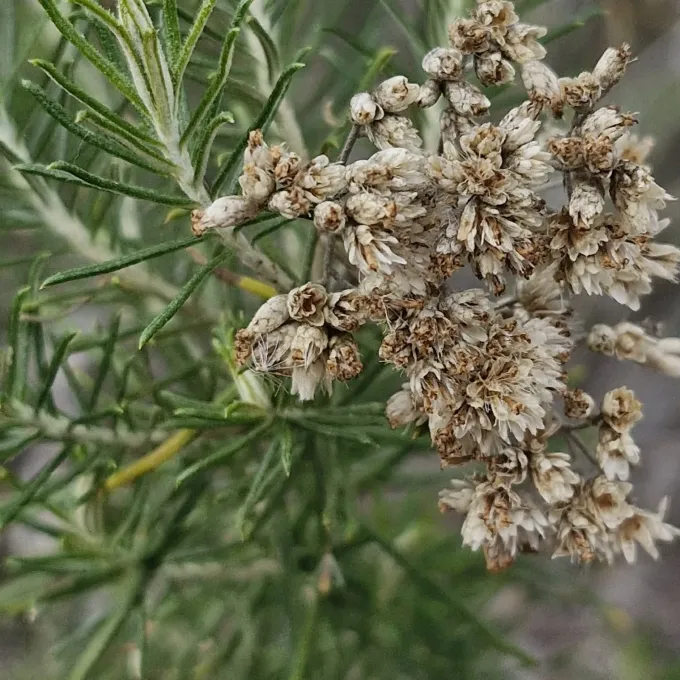
Description
Sowing dates
Propagation of Cassinia laevis is typically achieved through seed germination or by taking semi-hardwood cuttings during the active growing season.
Sowing seeds requires a well-draining, sandy-based medium to prevent the delicate seeds from rotting before germination occurs.
Cuttings should be taken from healthy, non-flowering stems and placed in a humid environment to encourage rooting within a few weeks.
Young seedlings are transferred to individual pots once they develop their first set of true leaves, allowing for strong root development.
Hardening off the plants before permanent transplantation is essential to ensure they survive the transition to outdoor environmental conditions.
Growing requirements
Cassinia laevis is a member of the Asteraceae family, native to Australia, where it thrives in exposed and sunny woodland or scrubland areas.
The plant is highly drought-tolerant, having adapted to the low-nutrient and often rocky soil profiles found within its native range.
Proper drainage is the single most important factor for successful cultivation; the species cannot tolerate waterlogged conditions or heavy clay soils.
It prefers full sun exposure to maintain its compact habit and to encourage the production of its characteristic floral clusters.
Minimal fertilization is required, as the plant is naturally adapted to survive and grow in nutrient-poor environments without supplemental feeding.
Main diseases and pests
Root rot is the primary threat to Cassinia laevis, usually triggered by excessive irrigation or poor soil structure that holds moisture too long.
Powdery mildew can occur in stagnant air conditions or during periods of high humidity if the plants are spaced too closely together.
Aphids occasionally target the tender new growth of the plant, which can be managed through physical removal or insecticidal soap applications.
Ensuring adequate air circulation around the canopy is a critical preventive measure against both fungal infections and certain pest infestations.
Regular monitoring of foliage color and stem vigor allows for early detection of potential problems, enabling quick and effective interventions.