
Caryocar villosum
Caryocar villosum
Description
Growing requirements
Caryocar villosum is a remarkable tropical tree species belonging to the Caryocaraceae family, native to the Amazon rainforest. It plays a vital role in local agroforestry systems and biodiversity conservation.
The tree thrives in regions with high humidity and annual precipitation exceeding 2000 mm. It requires well-drained, acidic forest soils that are rich in organic matter to support its rapid development during the juvenile phase.
Optimal growth conditions involve temperatures ranging between 22°C and 30°C. Caryocar villosum is highly sensitive to cold spells, and frost can be lethal to young saplings, limiting its cultivation to tropical zones.
Agricultural management requires careful selection of planting sites. The tree prefers open canopy gaps within the forest to maximize light interception while benefiting from the protection of surrounding vegetation against strong winds.
Soil management should prioritize the maintenance of the natural forest floor litter to provide necessary nutrients. Supplemental fertilization is generally not required in healthy, established plantations.
Yield
The harvest focuses primarily on the fruits, which are processed for their nutrient-dense oil. The oil extracted from the mesocarp is highly regarded in the cosmetics and gourmet food industries for its unique fatty acid profile.
A mature tree can produce a significant amount of fruit annually, although yields vary depending on local environmental conditions and the intensity of rainfall during the flowering season.
In addition to oil production, the timber of Caryocar villosum is recognized for its exceptional strength and resistance to decay. It is widely utilized in heavy construction and the maritime industry.
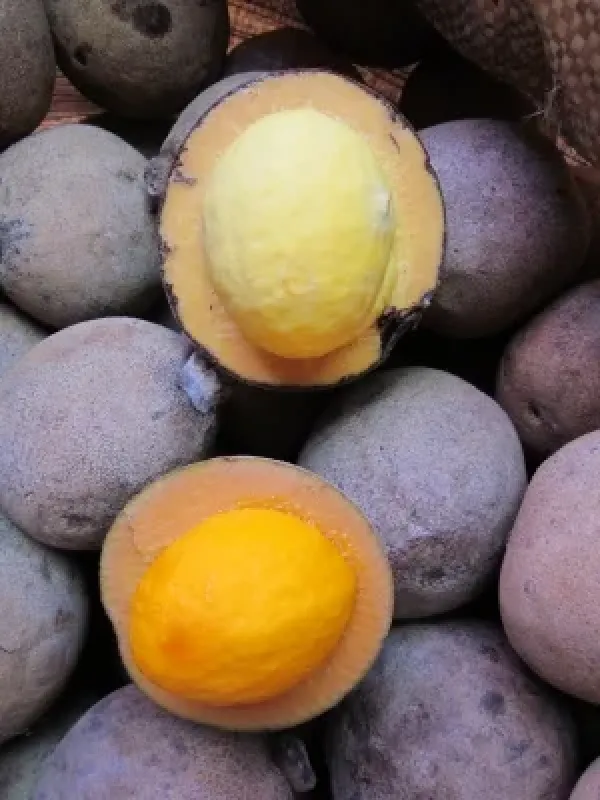
Post-harvest processing involves separating the thorny endocarp from the fleshy mesocarp. Because the internal structures are prickly, workers must use specialized tools to ensure safety and maintain product quality.
Economic prospects for this culture remain strong as global demand for natural, sustainable cosmetic ingredients continues to grow, providing incentives for domesticating wild populations.
Main diseases and pests
Fungal pathogens represent the most significant threat to the fruit crop, particularly during periods of excessive rainfall. These pathogens can cause fruit rot, leading to substantial economic losses for farmers.
Insects, particularly seed-boring beetles, pose a chronic problem for orchard management. Effective control relies on integrated pest management (IPM) strategies to minimize chemical usage.
Soil degradation and erosion occur if the tree is planted on steep slopes without proper contour management. This reduces the lifespan of the trees and negatively impacts the overall plantation productivity.
The lack of standardized cultivars makes it difficult to predict harvest timing and consistency of oil content. Ongoing research into vegetative propagation is attempting to address these issues.
Habitat loss due to land conversion for cattle ranching remains the biggest systemic threat to the genetic resources of Caryocar villosum in the wild.