
Pequi
Caryocar brasiliense
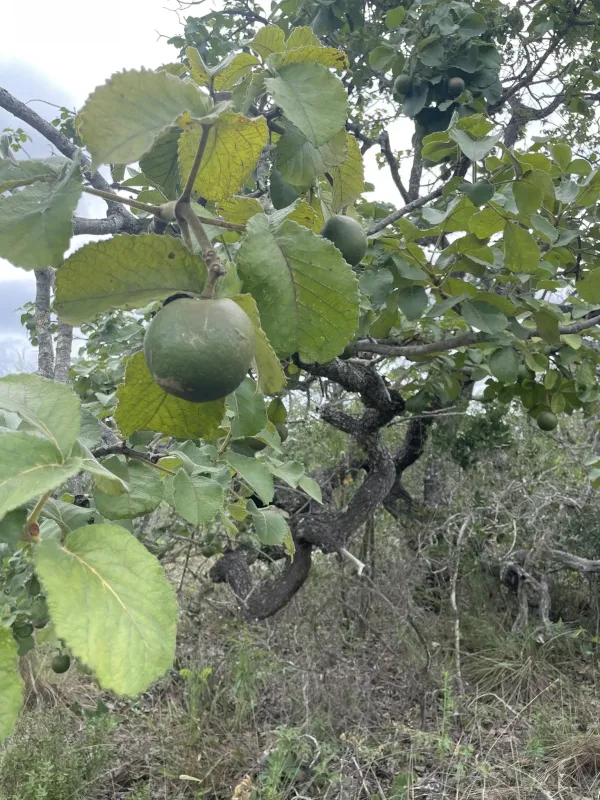
Description
Growing requirements
The Pequi tree (Caryocar brasiliense) is a fruit-bearing plant belonging to the Caryocaraceae family, native to the Brazilian cerrado.
This species thrives in well-drained, acidic, and nutrient-poor soils that are common in tropical savanna environments.
The tree exhibits remarkable tolerance to drought, allowing it to survive in regions with distinct seasonal rainfall patterns.
It can reach a height of 2 to 10 meters, possessing a robust taproot system that ensures stability and moisture uptake from deep soil horizons.
Optimal growth requires consistent tropical temperatures, as the plant is highly sensitive to frost and extreme cold conditions.
Yield
The primary economic value of the Pequi lies in its edible fruits, which are exceptionally rich in vitamin A, vitamin C, and healthy fatty acids.
These fruits are widely utilized in local cuisines, culinary oils, and the cosmetic industry, where they are valued for their antioxidant properties.
In standard cultivation, trees generally begin to bear fruit between 5 and 8 years after planting from seeds.
A single mature tree can produce several hundred fruits per harvest cycle, representing a significant agricultural asset for local producers.
The integration of Pequi into agroforestry systems promotes land sustainability while providing a consistent income stream for smallholder farmers.
Main diseases and pests
Common agricultural threats include various pests such as weevils, which can cause damage to developing fruits and significantly reduce yields.
Root rot and other fungal diseases may occur if the soil drainage is poor, especially during periods of heavy tropical rainfall.
Neglecting pruning and canopy management can create conditions favorable for bacterial infections that affect branch health.
Environmental degradation, particularly habitat fragmentation, poses a threat to the genetic diversity of the species.
Integrated pest management strategies are recommended to mitigate damage while maintaining environmental standards on the farm.
Harvesting
Harvesting usually takes place when the fruits reach full maturity, indicated by their vibrant yellow-orange color and aromatic profile.
Careful manual harvesting is necessary to prevent bruising and skin damage, which ensures the quality of the harvested produce.
Post-harvest handling is critical because the inner endocarp is covered in small spines that require careful processing and extraction techniques.
Fruits should be stored in ventilated containers to prevent moisture accumulation and the subsequent development of mold or decay.
Properly processed oil should be stored in a cool, dark environment to preserve its nutritional integrity and prevent lipid oxidation.