
Caragana spinosa
Caragana spinosa
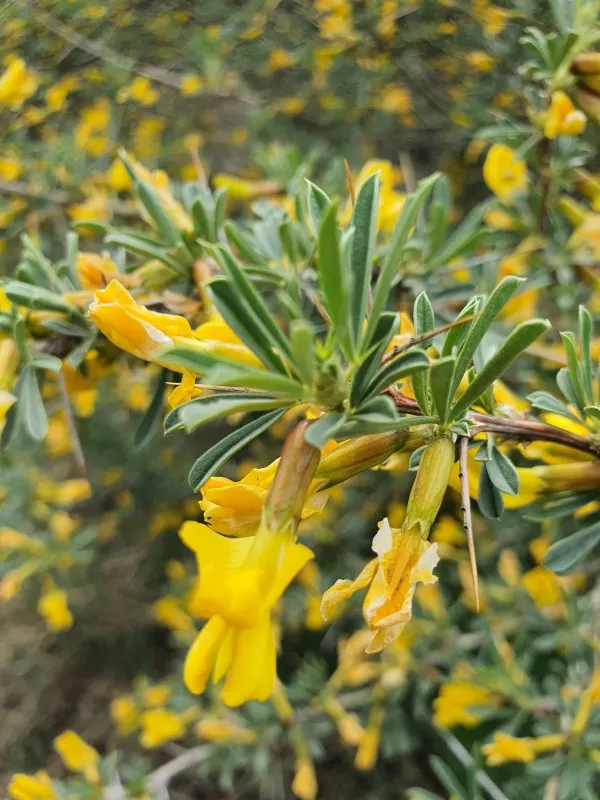
Description
Sowing dates
Sowing of Caragana spinosa seeds is typically performed in late autumn or early spring, following a process of seed coat scarification to enhance germination rates.
Spring-planted seeds require cold stratification for at least 6 to 8 weeks, which mimics natural conditions and significantly improves the uniformity of seedling emergence.
The optimal sowing depth is approximately 2 to 3 centimeters, ensuring the seeds are well-protected from desiccation while allowing successful shoot penetration.
Row spacing should be maintained at 70–90 centimeters to facilitate efficient mechanical maintenance and weeding, especially during the establishment phase.
Consistent moisture must be provided during the first few weeks after sowing to ensure the seedlings develop a robust root system capable of tolerating later drought conditions.
Growing requirements
As a member of the Fabaceae family, Caragana spinosa is highly resilient, thriving in harsh environments including cold steppe climates and arid conditions.
The shrub is well-adapted to poor, rocky, or sandy soils, effectively colonizing areas that are often unsuitable for conventional agricultural crops.
Full sun exposure is a critical requirement for this species, as it significantly promotes both the vigor of the plant and the intensity of its flowering season.
The species demonstrates excellent tolerance to low temperatures and wind-induced stress, making it an ideal candidate for windbreak plantations in exposed regions.
Its ability to fix nitrogen through root nodule symbiosis helps improve the chemical profile of the soil, providing a long-term benefit to the surrounding micro-ecosystem.
Yield
The primary economic value of Caragana spinosa lies in its contribution to soil conservation and the protection of arable land through stabilization measures.
In large-scale land management, the shrub serves as a vital component for windbreak systems that reduce soil erosion and optimize snow retention during winter months.
The plant is highly regarded in the beekeeping industry as a reliable early-season honey source, filling a niche period in the floral calendar for arid regions.
While not a traditional food crop, its foliage provides supplementary browse for livestock when other forage resources are scarce during peak summer drought.
By preventing degradation and enhancing soil structure, the planting of this shrub yields significant long-term returns in land health and ecological productivity.
Main diseases and pests
While generally robust, the plant can be susceptible to powdery mildew under conditions of excessive moisture or inadequate airflow within the foliage canopy.
Leaf-eating beetles and aphids represent the most frequent threats during the active growth period, occasionally impacting the photosynthetic capacity of young plants.
Wood-boring insects may target stressed individuals, emphasizing the need for healthy growth conditions and the prompt removal of severely compromised branches.
Preventative cultural practices, such as maintaining proper plant spacing and performing light annual pruning, are the most effective strategies for minimizing pest outbreaks.
Chemical control should be reserved for nursery environments where seedling protection is critical to ensuring the survival and growth of young plants.