
Scythian caragana
Caragana scythica
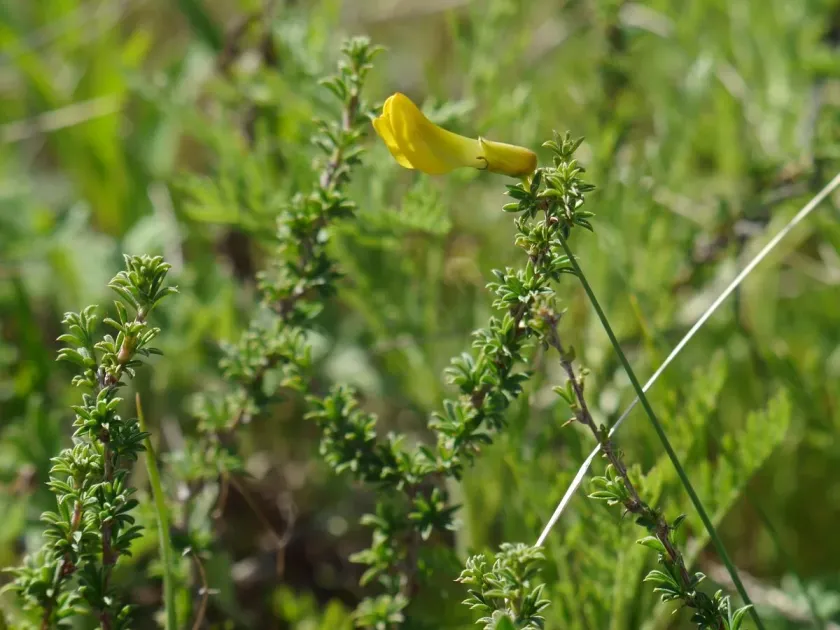
Description
Growing requirements
Scythian caragana (Caragana scythica) is a small, hardy shrub belonging to the pea family, Fabaceae. It is an endemic species primarily found in the steppe regions of Eastern Europe.
The plant thrives in extreme environments, particularly on rocky outcrops, limestone, or chalky substrates. These soils are often nutrient-poor, making the species highly specialized for such niches.
It displays remarkable tolerance to drought and thermal fluctuations. Its root system is deep and expansive, allowing it to survive in arid conditions where moisture is scarce.
Botanically, it features dense, thorny branching which acts as a protective mechanism against herbivory and high-velocity steppe winds. The foliage is sparse to minimize transpiration loss.
In terms of ecological application, it serves as a nitrogen-fixing plant. This biological function makes it an essential species for soil stabilization on degraded or eroded slopes.
Main diseases and pests
The primary threats to the survival of Scythian caragana are habitat fragmentation and the transformation of pristine steppes into agricultural lands.
Overgrazing poses a significant risk to the plant's regeneration. Livestock frequently browse on tender shoots, hindering the development of new generations of the shrub.
The species does not have major agricultural pests in the traditional sense, as it exists in low-density, natural populations with high innate resistance to pathogens.
Environmental factors such as climate change and the encroachment of competitive invasive species can threaten the long-term viability of established populations.
Conservation efforts prioritize habitat protection to ensure the species can continue its role in maintaining the structural integrity of thin, rocky steppe soils.