
Canthium crassum
Canthium crassum
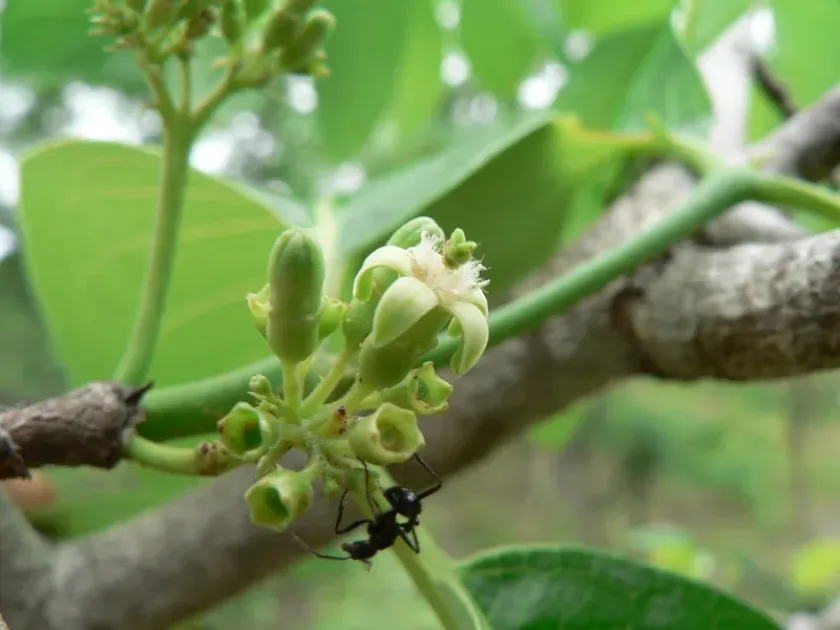
Description
Growing requirements
Canthium crassum is a perennial evergreen shrub or small tree belonging to the Rubiaceae family. This species is native to tropical regions of Africa, typically found in savannas and woodland ecosystems, where it has evolved to thrive in diverse climatic conditions ranging from humid areas to drier zones.
The plant requires a warm climate with optimal temperatures between 22 and 30 degrees Celsius. It exhibits significant resilience to seasonal water scarcity, which is a common feature in its natural habitat, allowing it to maintain growth during periods of erratic rainfall.
In terms of soil requirements, Canthium crassum performs best in well-drained loamy or sandy soils. It is highly sensitive to waterlogging, as poorly aerated root zones can lead to root rot and stunted development. Therefore, selecting sites with excellent natural drainage is paramount for healthy growth.
The botany of this plant is characterized by a dense canopy and a robust root system, which helps in efficient moisture uptake. These adaptations enable the plant to remain productive even in challenging environmental conditions, ensuring a steady supply of nutrients to its reproductive organs.
Economically, the species is valued for its fruits, which are rich in fats and nutrients, playing a significant role in local diets and traditional medicine. Its potential as an oil-bearing crop is a subject of increasing interest, as it represents a sustainable source of plant-based lipids.
Main diseases and pests
The primary diseases affecting Canthium crassum include various fungal pathogens that flourish in high-humidity environments. These infections often manifest as leaf spots or powdery mildew, potentially impacting the plant's photosynthetic efficiency and overall fruit yield.
Insect pests pose a substantial threat, particularly species that target the fruit and flowers. Weevils and lepidopteran larvae are known to damage the developing ovaries, often resulting in premature fruit drop and significant economic loss for growers.
Physical damage to the stem, caused by herbivores or mechanical stress, acts as a vector for secondary infections. These wounds compromise the tree's vascular system, making it susceptible to wood-boring insects and deeper pathogen penetration.
Competition from fast-growing weeds is particularly problematic for young trees, as they can deprive the saplings of essential sunlight and soil nutrients. Proper site preparation and early-stage weeding are critical to ensuring the tree reaches its establishment phase.
Integrated pest management strategies are recommended to mitigate these threats effectively. By improving airflow through strategic pruning and utilizing biological controls, growers can maintain the health of the orchard while preserving the quality of the harvested produce.