
Canthium coromandelicum
Canthium coromandelicum
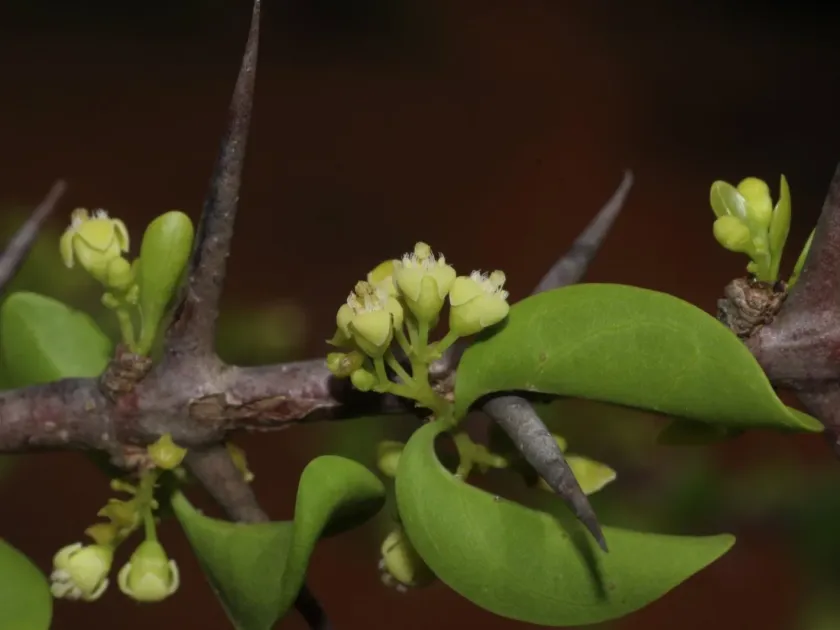
Description
Sowing dates
The propagation of Canthium coromandelicum in its natural habitat occurs primarily through seeds, which have a hard coat requiring stratification.
Sowing in professional nursery conditions is typically performed in the spring when soil temperatures reach stable levels above +20 degrees Celsius.
To enhance germination rates, growers often use organic growth stimulants, as wild seeds possess a deep dormancy phase characteristic of the species.
Seedlings show slow initial growth rates, requiring protected greenhouse environments and consistent irrigation until the root system is well-established.
Transplanting to the field is most successful at the start of the monsoon season, which provides the necessary moisture for early plant adaptation.
Growing requirements
Canthium coromandelicum is a member of the Rubiaceae family, appearing as a thorny, drought-resistant shrub or small tree native to arid regions.
The species prefers well-drained, rocky, or sandy loam soils with a pH ranging from neutral to slightly alkaline for optimal nutrient uptake.
As a sun-loving plant, it requires full solar exposure to promote robust wood development and the production of fragrant, small white flowers.
The plant exhibits remarkable adaptation to water scarcity due to its xerophytic leaf structure and a deep, extensive root architecture.
Waterlogging is detrimental to this species; therefore, selecting sites with excellent soil drainage is critical to prevent root rot and physiological stress.
Yield
In agricultural settings, Canthium coromandelicum is primarily valued for creating impenetrable living fences due to its sharp, robust thorns.
The fruits are edible and widely collected by local communities for consumption, although they do not currently support large-scale industrial markets.
The biomass of the plant serves as a supplementary source of organic matter, though current exploitation remains largely focused on wild-harvested material.
Ethnobotanical records indicate that roots, leaves, and bark are utilized in traditional medicine for their anti-inflammatory and antiseptic effects.
Future agricultural potential lies in the pharmaceutical extraction of secondary metabolites, which are of significant interest for modern medicine.
Main diseases and pests
Canthium coromandelicum possesses natural chemical defenses that provide high levels of resistance against many common agricultural pests.
The main risk for younger specimens is the development of soil-borne fungal pathogens, especially if the cultivation site suffers from poor drainage.
Under conditions of excessive humidity, plants may be susceptible to powdery mildew, which impairs photosynthesis and reduces overall plant vigor.
During prolonged dry spells, opportunistic pests like scale insects or spider mites may occasionally infest young, vulnerable shoots.
Integrated pest management, including the use of bio-pesticides and regular sanitary pruning of damaged branches, remains the standard for crop protection.