
Canna iridiflora
Canna iridiflora
Description
Growing requirements
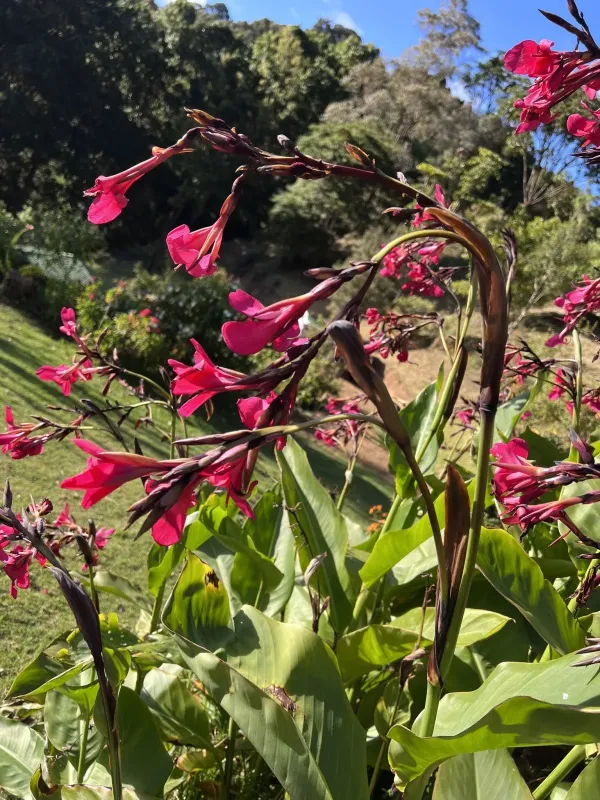
Canna iridiflora is a perennial herbaceous plant belonging to the Cannaceae family. Originally native to the tropical regions of Peru and Colombia, it is highly valued for its tall growth habit and elegant, drooping, iris-like flowers.
The plant features large, lush leaves and a sturdy stem that can reach heights of over two meters. Its root system is characterized by thick, fleshy rhizomes that serve as storage organs for energy, allowing the plant to thrive during the intensive growing season.
Successful cultivation requires a sunny location with deep, fertile, and well-drained soil. As a tropical species, it thrives best in warm climates with high ambient humidity and consistently moist soil conditions throughout the year.
In regions with distinct winters, agricultural practice involves planting in spring once the danger of frost has passed and lifting the rhizomes in autumn. This cycle is essential to preserve the plant from freezing temperatures and dormancy rot.
Regular fertilization with high-nitrogen and phosphorus-rich fertilizers is recommended to support rapid vegetative development and prolonged floral display. Mulching helps to maintain soil moisture and regulates root zone temperature.
Main diseases and pests
Fungal pathogens such as rust and gray mold are common threats, especially when plants are grown in overcrowded conditions with poor air circulation.
Bacterial diseases can cause severe rotting of the stems and buds, frequently triggered by excessive overhead watering or stagnant soil conditions.
Common insect pests include aphids and spider mites, which congregate on the underside of leaves and can stunt growth if left untreated.
Root-knot nematodes can severely damage the underground rhizomes, leading to overall plant decline and poor flower production over several seasons.
Effective management includes maintaining crop hygiene, using clean planting stock, and applying appropriate biological or chemical controls at the first sign of pest infestation.