
Canna flaccida
Canna flaccida
Description
Growing requirements
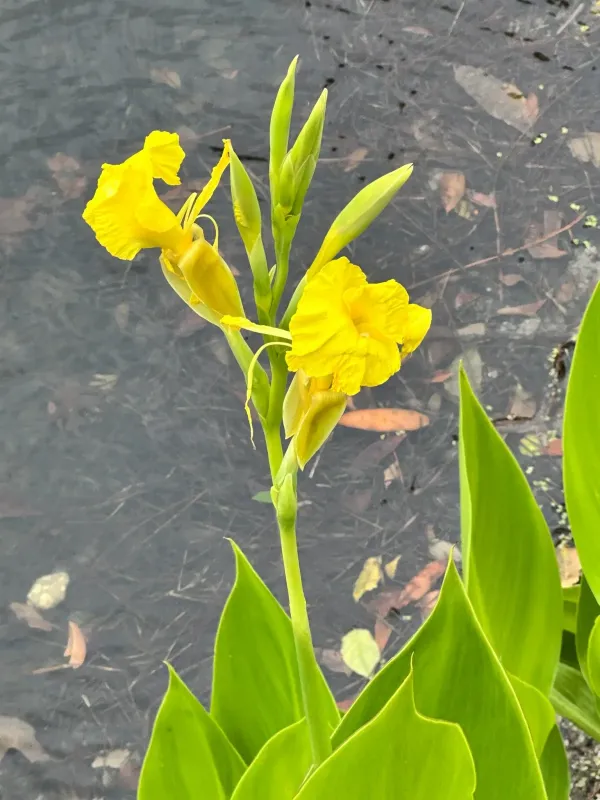
Canna flaccida, commonly known as the golden canna, is a perennial herbaceous plant belonging to the Cannaceae family. Naturally, it inhabits wetlands, pond edges, and swampy areas, which defines its preference for high moisture environments.
Originating from the southeastern United States, this species is well-adapted to warm climates. The plant features a robust rhizome system and requires significant sunlight to reach its full physiological potential during the growing season.
The ideal soil for Canna flaccida is humus-rich, moisture-retentive, and slightly acidic or neutral. Because of its aquatic tendencies, constant soil moisture is essential; the plant will show signs of stress if the growing medium dries out completely.
Regarding climate, the species requires a long, warm growing period. It is not cold-hardy, and in temperate regions, the rhizomes must be lifted and stored indoors during the winter months to prevent freezing and rot.
Optimal growth requires full sun exposure. In shaded areas, the plant tends to become leggy and produce weak flower stalks, which significantly diminishes its aesthetic value and overall health.
Main diseases and pests
Leaf rollers are the most common insect pests for Canna flaccida. These larvae feed on the foliage and roll leaves into protective tubes, which can severely stunt the development of the shoot if left untreated.
Nematodes are a significant underground threat. They attack the root system, causing yellowing and stunted growth. Infected plants should be carefully removed to prevent the spread of these pests to healthy patches.
Fungal issues such as leaf rust are frequent in humid conditions. This manifests as brown, necrotic spots on the foliage, which can be managed with copper-based fungicides and proper spacing to allow for adequate ventilation.
Bacterial blight is a severe condition that causes the blackening of flower buds and stem rot. It is often triggered by poor drainage or cool, overly humid weather, making proper soil preparation a crucial preventive measure.
Viral infections like Canna Yellow Streak Virus can cause unsightly leaf mottling and plant deformation. Since no chemical cure exists for viruses, strict sanitation practices, including the removal of infected plants, are essential.