
Canna hybrids
Canna hybrids
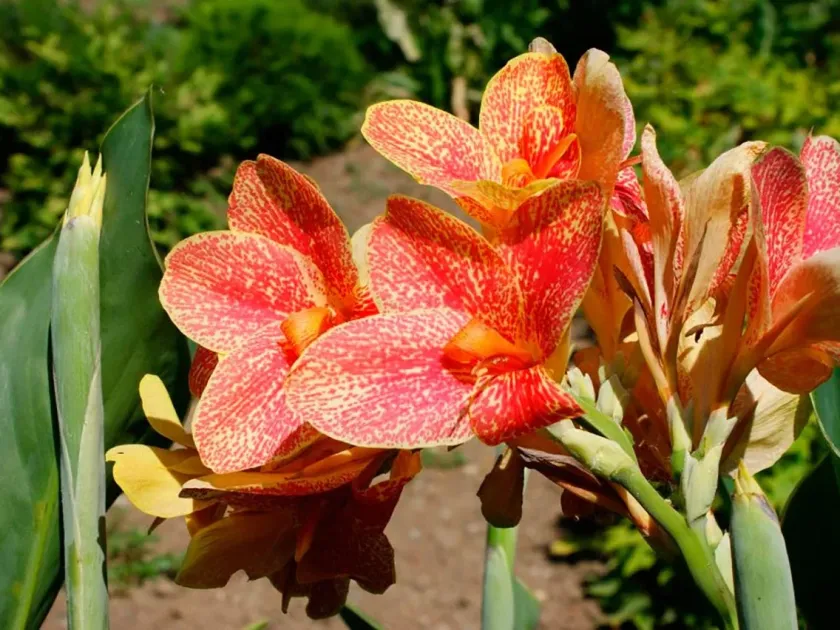
Description
Sowing dates
Canna hybrids, belonging to the Cannaceae family, are ornamental perennials that are typically propagated by dividing rhizomes. This process occurs in early spring to prepare the plants for the upcoming season.
For a head start, gardeners often begin sprouting rhizomes indoors in late winter. This ensures that the plants are well-established by the time they are moved outdoors after the danger of frost has passed.
Planting in the open field requires careful attention to depth. Rhizomes should be placed 10–15 centimeters deep, ensuring that the growth buds are positioned upwards to encourage vigorous sprouting.
While seed propagation is possible, it is reserved primarily for breeding new hybrid varieties. Seeds have a very thick, water-impermeable seed coat that necessitates physical scarification for successful germination.
The spacing between plants should be adjusted based on the specific variety, typically ranging from 40 to 60 centimeters apart to allow for proper airflow and root development.
Growing requirements
Canna hybrids are sun-loving plants that thrive in warm climates. They require a minimum of 6 to 8 hours of direct sunlight daily to produce high-quality foliage and abundant blooms.
The soil should be rich in organic matter, loose, and well-draining. Canna plants are known to be heavy feeders and perform best when the soil is amended with compost or well-rotted manure before planting.
Consistent moisture is critical during the growing season. Because of their large leaf area, Cannas transpire significantly and will suffer quickly if they experience prolonged drought conditions.
Regular fertilization with a balanced, slow-release fertilizer is recommended throughout the summer months. Avoid excessive nitrogen, which can lead to lush leaf growth at the expense of flower production.
In regions where temperatures fall below freezing, these plants are not winter-hardy. They must be dug up and stored in a frost-free environment to survive the winter months.
Yield
The yield of Canna hybrids is measured by the quality and quantity of the rhizomes produced over a single growing season. Healthy rhizomes increase in size and multiply, providing material for the following year.
In professional ornamental production, the success of the harvest is determined by the number of viable, clean, and disease-free rhizome sections obtained after a season of active growth.
The ornamental yield, or the floral display, is a hallmark of the hybrid varieties. Well-maintained plants can produce several inflorescences, providing a continuous display of color until the first frost.
Biomass production is another aspect of Canna cultivation. In some regions, the large, nutrient-dense leaves are harvested to contribute to high-quality compost or green manure for other crops.
To maximize the harvest of rhizomes, cultivators often use specific hilling techniques to encourage the development of secondary growth buds along the length of the rhizome.
Main diseases and pests
Bacterial blight is one of the most serious threats to Canna hybrids, causing leaves and buds to blacken and die. High humidity and poor air circulation significantly increase the risk of this infection.
Viral diseases, such as the Canna yellow streak virus, can cause mottled foliage and distorted blooms. These viruses are often spread by pests and require immediate removal of infected plants.
Common pests include aphids and spider mites, which can become problematic during hot, dry weather. These insects sap the plant's vitality and can act as vectors for more serious viral infections.
Nematodes are a subterranean pest that can severely damage the rhizomes, leading to stunted growth. Using clean, pathogen-free soil is essential for preventing these types of infestations.
- Practice crop rotation to minimize soil-borne pathogens.
- Disinfect garden tools to prevent the spread of bacteria.
- Monitor foliage regularly for early signs of pests.
- Avoid overcrowding to maintain good air circulation.
Harvesting
Harvesting should be timed immediately after the first autumn frost has killed the foliage. This allows the plant to naturally transition into dormancy, focusing energy on the rhizomes.
Carefully dig up the rhizomes using a garden fork to prevent cutting or bruising. Any mechanical damage during harvest increases the likelihood of storage rot and fungal infections.
After removal, excess soil should be shaken off, and the rhizomes should be allowed to air-dry in a cool, sheltered, and well-ventilated spot before being moved to long-term storage.
For storage, place the rhizomes in crates layered with peat moss, sawdust, or sand. This medium helps regulate humidity and keeps the rhizomes from dehydrating while preventing them from rotting.
Periodic inspections throughout the winter are necessary. Any rhizome showing signs of decay should be removed immediately to prevent the spread of rot to the rest of the stored stock.