
Buchanania sessilifolia
Buchanania sessilifolia
Description
Growing requirements
Buchanania sessilifolia is a perennial tree species belonging to the Anacardiaceae family. Related to economically significant plants like the cashew, this species is native to the tropical regions of Southeast Asia, including Malaysia and Indonesia.
The tree is primarily found in wetland ecosystems and peat swamp forests, demonstrating a high tolerance for waterlogged soil conditions. This biological adaptation makes it a specialized crop for specific tropical environments where other fruit trees might struggle.
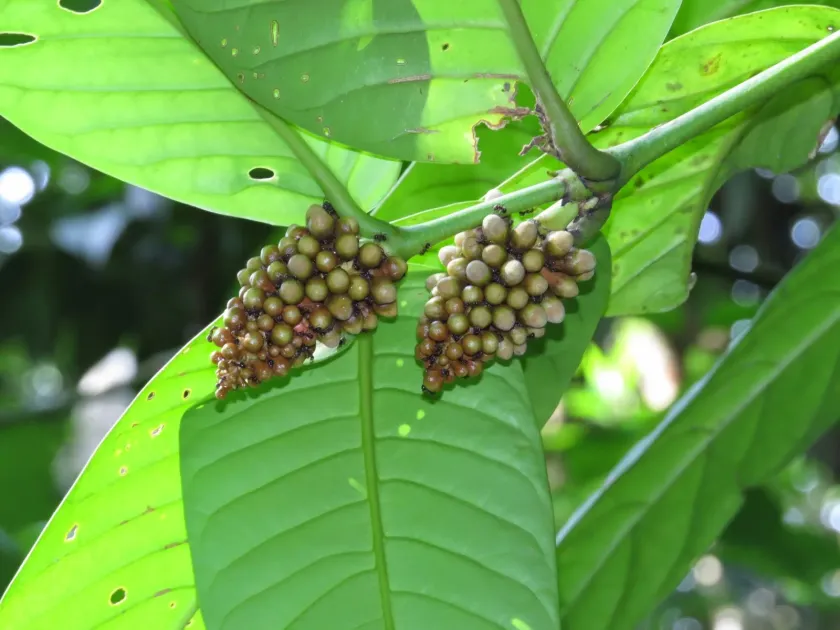
The plant is distinguished by its sessile leaves, which are leathery in texture to prevent excessive transpiration in hot, humid climates. This botanical feature is vital for the tree's survival in its dense native forest habitats.
For successful cultivation, the species requires an equatorial climate characterized by year-round high temperatures and constant humidity. The plant is extremely susceptible to thermal shock and cannot withstand any frost or cold snaps.
Soil management for this crop focuses on maintaining high organic matter content. While the trees are adapted to acidic peat soils, commercial plantations emphasize drainage management during early growth stages to optimize root development and tree vitality.
Harvesting
The economic value of Buchanania sessilifolia lies in its fruit and seeds, which are highly prized for their unique flavor and high oil content. Harvesting is a delicate process typically performed manually to ensure only mature fruits are collected.
The seeds are a staple ingredient in various regional cuisines, often used as a nutrient-dense addition to traditional desserts and savory dishes. Their distinct nut-like taste makes them a sought-after commodity in local markets.
Beyond its culinary utility, the tree provides timber that is utilized in local construction. The wood is valued for its durability and resistance to degradation in high-humidity tropical environments.
Post-harvest handling is critical for preserving seed quality. Proper drying methods are employed to reduce moisture content, which prevents the oxidation of essential oils and ensures the longevity of the product during storage.
Ongoing agricultural efforts aim to formalize cultivation practices to increase yields. By selecting superior genotypes and optimizing plantation spacing, growers work to secure the supply of this valuable tropical plant resource.