
Buchanania nitida
Buchanania nitida
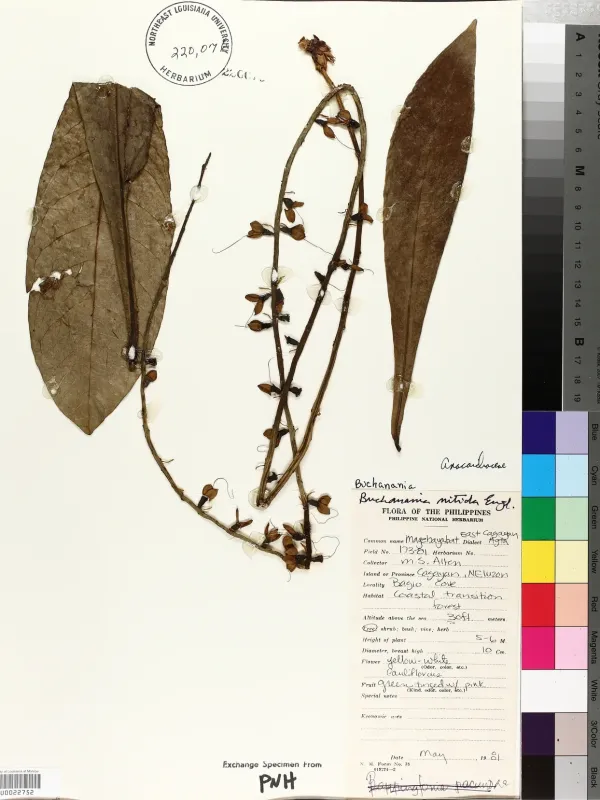
Description
Growing requirements
Buchanania nitida is a tropical tree species belonging to the Anacardiaceae family. Native to the humid forests of Southeast Asia, this plant is valued for its oily seeds and wood quality in its natural habitat.
The culture thrives in tropical environments where the climate is constantly warm and humid. It is highly sensitive to frost, requiring locations where the annual temperature remains above 15 degrees Celsius consistently.
For successful growth, it demands well-drained, nutrient-rich soils. Waterlogging is extremely detrimental to the root system, so selecting slightly elevated or well-sloped sites for planting is a critical agronomic requirement.
The botanical structure consists of a sturdy trunk with a spreading crown covered in characteristic glossy leaves. These leaves are adapted to manage moisture effectively, which is typical for plants in monsoon-influenced regions.
The economic focus lies on the harvest of seeds which are used extensively in traditional cuisine and pharmaceutical preparations. Modern agronomy focuses on optimizing these yields through improved spacing and soil amendment programs.
Main diseases and pests
Fungal pathogens causing root rot are the primary threat to Buchanania nitida plantations. Management requires strict irrigation control and the application of appropriate antifungal treatments if symptoms appear.
Pests such as scale insects and mealybugs frequently colonize the dense foliage. These insects weaken the tree by extracting sap, which can lead to leaf drop and reduced seed production if left untreated.
Nematode infestations in the rhizosphere pose a hidden but significant risk to the longevity of the trees. Using certified, disease-free nursery stock is the most effective strategy for mitigation.
Environmental stress caused by sudden changes in weather can also predispose trees to secondary infections. Keeping the trees healthy through proper fertilization helps them withstand pest pressures.
- Monitor leaf color changes frequently.
- Inspect the bark for signs of borer activity.
- Apply integrated pest management (IPM) strategies.