
Buchanania lanzan
Buchanania lanzan
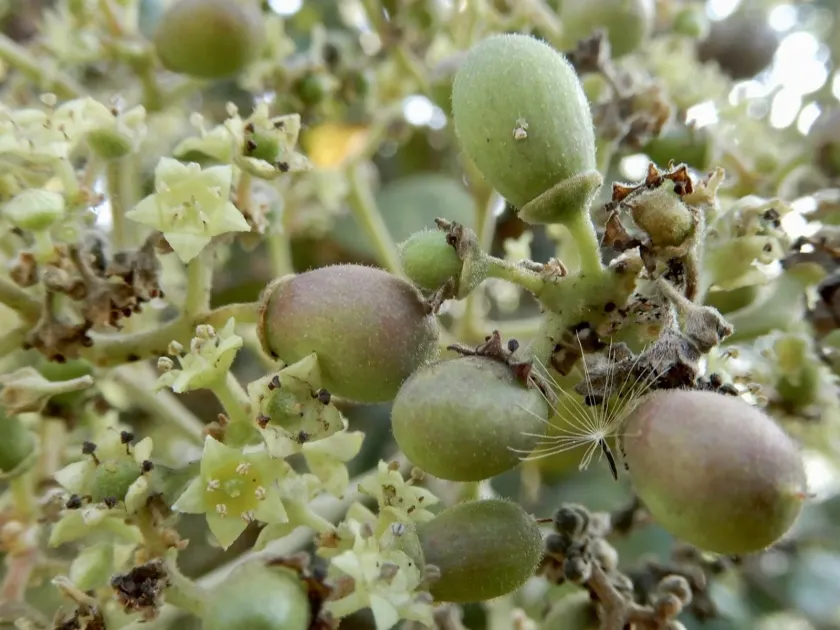
Description
Sowing dates
Buchanania lanzan is typically propagated via seeds, which require careful handling and specific treatment to overcome dormancy and ensure germination.
The best time to sow the seeds is at the onset of the monsoon season, as the high humidity and warm temperatures significantly boost the success rate.
Nursery-grown seedlings are usually raised in containers for about two years before they are considered robust enough for transplanting into the field.
When establishing an orchard, spacing is crucial; planting trees at intervals of 8 to 10 meters allows for healthy canopy development.
Each planting site should be prepared with organic manure to support the initial root growth and overall establishment of the young sapling.
Growing requirements
This tree belongs to the Anacardiaceae family and is native to the tropical forests of South and Southeast Asia, flourishing in diverse conditions.
It thrives in well-drained loamy or sandy soils, as the species is highly sensitive to waterlogging, which often leads to root rot issues.
Buchanania lanzan is remarkably drought-tolerant once mature, but young trees require supplemental irrigation to survive and develop properly.
The species prefers full sunlight and performs best in regions with high temperatures, typically ranging between 25 and 35 degrees Celsius.
Proper ventilation within the orchard is necessary to ensure consistent growth and to prevent the build-up of excess humidity around the foliage.
Yield
Economic production typically begins when the trees reach 7 to 10 years of age, making this a long-term investment for agricultural producers.
The fruit is a small drupe, containing a single kernel known globally as Chironji, which is a highly prized culinary nut in many cultures.
Average yields can vary significantly, but a healthy, mature tree is capable of producing between 10 and 20 kilograms of fruit per harvest season.
Consistent nutrient management and correct pruning techniques are essential factors that directly influence the total yield per tree.
Market demand for Chironji kernels remains high, which justifies the labor-intensive harvesting and processing required to bring them to market.
Main diseases and pests
Fungal diseases, especially those affecting the leaves and fruit, can be prevalent during the rainy season if the orchard lacks proper spacing.
Various insect pests, including fruit borers, pose a threat to the crop, necessitating a proactive and integrated pest management approach.
Pruning is not only for shaping the tree but also acts as a sanitary measure to improve airflow and reduce the incidence of disease outbreaks.
Trunk health should be monitored regularly to prevent infestations by wood-boring insects, which can severely weaken or even kill the tree.
Early identification of symptoms is vital for effective disease control, ensuring the long-term health and productivity of the entire plantation.
Harvesting
Harvesting is a manual process because the fruits do not ripen simultaneously, requiring multiple visits to each tree throughout the season.
After collection, the fruits are depulped and the nuts are dried under the sun to reduce moisture content for better kernel extraction and storage.
Proper drying is essential to prevent mold growth, which can quickly degrade the quality of the delicate and flavorful Chironji kernels.
Large-scale operations often utilize collection sheets spread under the tree canopy to facilitate the gathering of ripened fruits that drop naturally.
Once dried and extracted, the kernels should be stored in airtight containers in a cool environment to maintain their freshness and oil quality.