
Buchanania arborescens
Buchanania arborescens
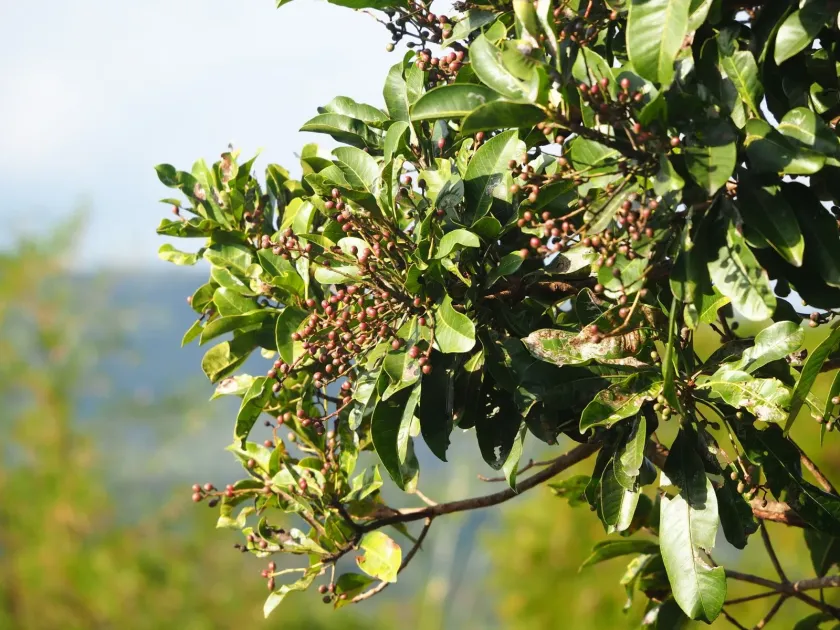
Description
Sowing dates
The propagation of Buchanania arborescens relies heavily on the use of freshly harvested seeds, as they exhibit a short period of viability. The most favorable time for sowing is the beginning of the rainy season, which provides the necessary moisture for germination.
To improve germination rates, scarification of the seed coat is recommended, facilitating moisture uptake by the embryo. Seeds should be planted in well-drained soil at a depth of two to three centimeters.
In natural habitats, seed dispersal is managed by local fauna, including birds and small mammals. In a nursery setting, maintain an ambient temperature of at least 25 degrees Celsius to encourage uniform seedling emergence.
Germination can be a prolonged process, requiring consistent monitoring of soil moisture. Seedlings are delicate during the early stages and benefit significantly from partial shading to prevent desiccation.
Once the seedlings reach a height of 30 to 40 centimeters, they are ready for transplanting into their permanent location. Proper spacing is essential to ensure adequate airflow and light penetration, reducing the risk of disease.
Growing requirements
Buchanania arborescens is a member of the Anacardiaceae family and is native to tropical environments. It thrives in locations with full sun exposure, which is necessary for vigorous growth and optimal fruit production.
The crop is adaptable to a variety of soil types, ranging from sandy to rocky substrates, provided they are deep and well-drained. The species is highly sensitive to waterlogged conditions, which can be lethal to the root system.
While the tree is drought-tolerant once established, supplemental irrigation is recommended during the flowering and fruit-setting stages to ensure high yields and fruit quality.
The ideal temperature range for this species is between 22 and 32 degrees Celsius. It is not frost-tolerant, limiting its cultivation to tropical and subtropical regions where temperatures remain consistently above freezing.
On nutrient-deficient soils, a balanced, low-nitrogen fertilizer regimen is recommended. This approach promotes root development and fruit yield rather than excessive vegetative growth, which can lead to structural weakness.
Yield
The yield of Buchanania arborescens is influenced by the maturity of the tree and the environmental conditions. Mature trees are capable of producing substantial quantities of fruits that are highly valued for their nutritional profile.
Flowering typically occurs with the change of seasons, resulting in clusters of small drupes. The fruits ripen over an extended period, necessitating multiple harvesting passes to collect the crop at its peak maturity.
This crop holds significant potential as a source of high-quality vegetable oil and protein. Its use in food processing and the confectionery industry is a growing market in its native ranges, including Southeast Asia and Australia.
Proper pruning techniques are crucial to maximizing fruit production by encouraging the development of secondary fruiting branches. Care must be taken to manage the canopy structure to support the weight of the fruit clusters.
The fruits serve as a critical component of local biodiversity, and in plantation settings, strategies to mitigate crop loss from local wildlife may be necessary to ensure commercial viability.
Main diseases and pests
Root rot is the primary threat to the health of the trees, often caused by inadequate drainage and prolonged soil saturation. This leads to reduced nutrient uptake, stunted growth, and potential tree loss.
Pests such as scale insects and aphids may infest young shoots, draining the plant's resources. Regular monitoring of the foliage and stems allows for timely intervention using integrated pest management practices.
Fungal leaf spot diseases are common in humid conditions with poor air circulation. Sanitation practices, including the removal of infected material and canopy thinning, are effective in controlling these pathogens.
- Powdery mildew affecting floral parts during wet weather.
- Lepidopteran larvae feeding on the leaf canopy.
- Root-knot nematodes, which can be problematic in sandy soil types.
Effective management of diseases is based on strict adherence to good agricultural practices, optimal spacing, and maintaining overall tree vigor through balanced nutrition and proper site selection.
Harvesting
Harvesting is performed manually when the fruits exhibit the characteristic color changes associated with ripeness. Due to their delicate skin, gentle handling is required throughout the harvesting and post-harvesting process.
After collection, the fruit flesh is removed to extract the seeds. This extraction process often involves maceration or washing in water, followed by rapid air-drying under the sun to ensure quality.
Drying is a vital step to reduce moisture content, preventing the growth of molds and ensuring the stability of the oils within the seeds. Proper moisture management is the key to a shelf-stable product.
Stored seeds should be kept in a cool, dry, and well-ventilated environment to prevent oxidative rancidity of the lipids. Proper storage maintains the seed's flavor and nutritional value for extended periods.
Sorting by size and kernel integrity enhances the market value of the product, catering to both industrial food manufacturers and premium culinary markets.