
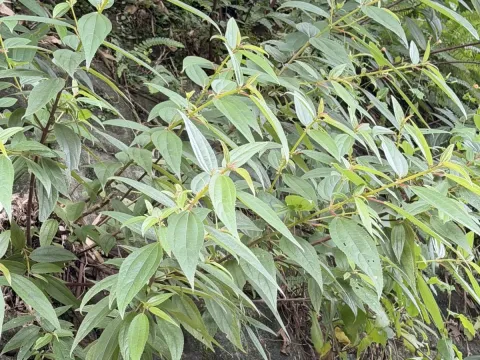
Boehmeria
Boehmeria Jacq.
Boehmeria, commonly known as ramie, is a perennial shrub belonging to the Urticaceae family. In industrial farming, this crop is primarily propagated vegetatively using rhizome cuttings or stem cuttings, as seed propagation often leads to inconsistent plant quality and low germination rates.
What the section contains

Boehmeria
The best time to establish a ramie plantation is early spring, once the soil has sufficiently warmed up. In regions with mild climates, autumn planting is also viable, allowing the root system to establish itself before the arrival of intense summer heat.
When using vegetative propagation, rhizomes are planted in furrows at a depth of 10–15 centimeters. The planting density depends on soil fertility and the desired number of stems per hectare, typically maintaining a distance of 50–60 centimeters between rows.
Proper soil preparation is a critical factor for success; the site must be deep-plowed and cleared of weeds, as young ramie shoots are highly sensitive to competition for nutrients during their first year of growth.
Once established, a plantation can remain productive for 10–15 years, provided that regular fertilization is maintained and the root system is managed to support the continuous emergence of new, vigorous stems each season.
Boehmeria has high climatic demands, preferring tropical and subtropical regions with abundant rainfall. The optimal temperature for active stem growth ranges from 22 to 28 degrees Celsius.
The crop is highly moisture-sensitive and does not tolerate prolonged droughts; however, water stagnation in the root zone can lead to fungal diseases and plantation failure, making effective drainage systems essential.
The best yields are obtained on fertile, well-drained loamy or sandy-loam soils with a neutral or slightly acidic pH. Saline or waterlogged areas are entirely unsuitable for successful commercial cultivation.
The crop reacts sharply to nutrient deficiencies, especially nitrogen and potassium. To produce high-quality fiber, it is necessary to apply organic and mineral fertilizers throughout the entire growing season.
While the plant loves sunlight, it can tolerate partial shade during its juvenile stage. When planted densely, stems grow taller and thinner, which improves the quality of the fiber, known for its exceptional strength and silky texture.
The yield of Boehmeria is determined by the intensity of agricultural practices and the specific climatic zone. Under optimal conditions, farmers can harvest between two to four cuts per growing season.
The total weight of dried stems per hectare can range from 15 to 25 metric tons, depending on the age of the plantation and the frequency of harvesting. The yield of pure, refined fiber is approximately 3–5% of the total green stem weight.
Ramie fiber is considered one of the highest quality natural bast fibers. It is prized for its exceptional tensile strength, low hygroscopicity, and resistance to rot, making it a strategic raw material for specialized textiles.
Maximum productivity is typically achieved between the 3rd and 6th year after planting. Over time, without proper management and nutrient replacement, yields may gradually decline.
To increase fiber output, intensive irrigation systems and split-application nitrogen fertilization are used after each harvest to maintain a high rate of biomass regeneration.
Boehmeria is susceptible to various pests, with leaf-eating beetles and butterfly larvae being the most significant threats as they damage foliage and inhibit stem development.
Among fungal diseases, leaf spot and root rot are the most common, typically triggered by improper humidity management or poor air circulation within the plantation. Prevention relies on adhering to best agronomic practices.
Weeds are major competitors during the initial establishment of the plantation. However, as the plants grow and the canopy closes, ramie effectively suppresses most weed species due to its rapid vertical growth.
In intensive production, regular phytosanitary monitoring is essential to identify early outbreaks of pests or diseases and prevent their spread to adjacent sectors of the field.
Using resistant cultivars is the primary method for disease control. Chemical crop protection agents are applied sparingly to meet strict quality standards for eco-friendly textile raw materials.
Harvesting is conducted when the stems reach peak technical maturity, characterized by a color change in the lower part of the stem from green to a distinct brownish shade.
Mowing is performed mechanically using specialized harvesters set to a minimal cutting height to ensure the rhizomes remain undamaged, allowing for the regrowth of subsequent harvests.
Immediately after cutting, the stems undergo decortication, which involves separating the bark containing the fibers from the woody core of the stem. Prompt processing is crucial to ensure high fiber quality.
The extracted fibers are then washed and dried under sunlight. Proper drying is vital to prevent fiber darkening and the growth of mold, ensuring the natural bright white appearance is preserved.
After initial processing, the fiber is pressed into bales for transport to textile mills, where it undergoes degumming to remove pectin substances before spinning into high-quality yarn.