
Blepharis linariifolia
Blepharis linariifolia
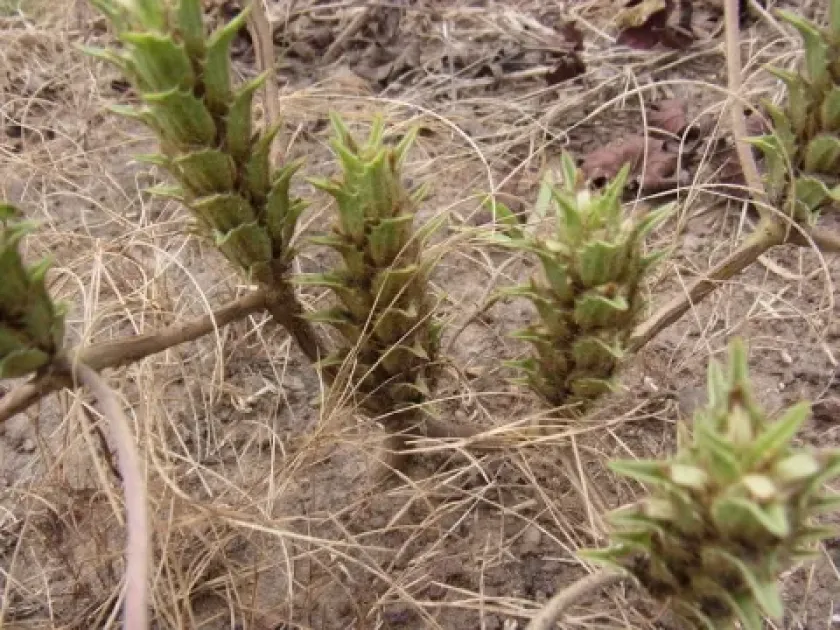
Description
Growing requirements
Blepharis linariifolia is a resilient perennial herbaceous plant belonging to the Acanthaceae family. It is recognized for its exceptional adaptation to the harsh, arid environments of the African Sahel and desert regions.
Native to countries like Niger, Mali, and Sudan, this plant has evolved to thrive under extreme temperatures and limited water availability. Its ability to survive where other vegetation fails makes it a crucial component of desert ecosystems.
The plant features narrow, linear leaves that resemble flax, a trait that helps in reducing transpiration rates. This morphological adaptation is essential for maintaining water balance during the scorching summer months.
It possesses a deep, robust root system that penetrates deep into the soil to tap into sub-surface moisture. The plant favors sandy or stony soil types and is highly effective at stabilizing soil in areas prone to erosion.
Regarding agrotechnology, Blepharis linariifolia requires minimal intervention. It does not need chemical fertilizers or irrigation, positioning it as an ideal candidate for sustainable land management and desert greening initiatives.
Yield
The primary agricultural utility of Blepharis linariifolia is as a source of forage. It is highly palatable to goats, sheep, and camels, providing essential nutrition when other pastures become dry and unproductive.
The biomass produced by this plant is rich in nutrients, making it a reliable feed source during critical drought periods. This significantly aids livestock productivity in marginal regions.
Yield varies based on seasonal rainfall, but the plant is capable of forming dense stands when environmental conditions are favorable. This allows for managed rotational grazing systems in dryland environments.
The seeds of the plant are also collected for ecological restoration projects. Due to their high germination rate after initial rains, they are used to re-vegetate degraded landscapes and combat desertification.
Beyond forage, the plant holds traditional medicinal values among local communities, proving its multi-purpose importance within regional agricultural systems.
Main diseases and pests
Overgrazing is the most significant threat to Blepharis linariifolia. Excessive browsing by livestock can exhaust the plant's resources and prevent it from reaching the reproductive stage necessary for seed production.
While the plant is hardy, it can be susceptible to damage from various insects that feed on its leaves. Though usually not lethal, heavy infestations can reduce the overall yield of green biomass available for livestock.
Climate change poses a risk to the plant's life cycle. Shifting rainfall patterns can disrupt the flowering and seed dispersal periods, making it difficult for the species to maintain its populations in the wild.
Invasion by more aggressive weeds, potentially spurred by changing soil conditions, can outcompete Blepharis linariifolia in certain areas, limiting its spread.
Lastly, soil waterlogging caused by poor drainage or unexpected flooding events can lead to root rot. Being an arid-adapted species, it lacks the physiological mechanisms to handle prolonged exposure to saturated soil conditions.