
Blepharis attenuata
Blepharis attenuata
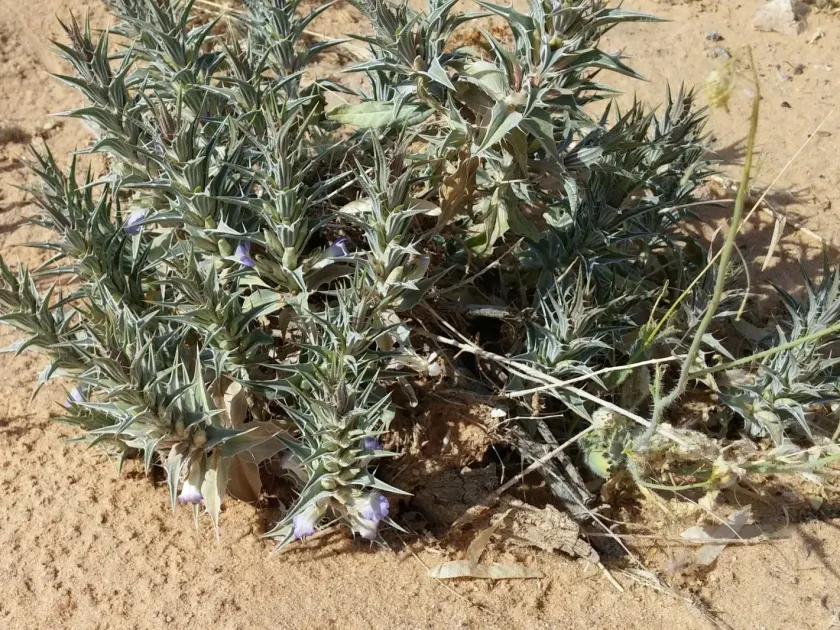
Description
Sowing dates
Blepharis attenuata is a perennial plant of the Acanthaceae family, well-adapted to arid environments and harsh climatic conditions.
The biological cycle of the plant is tightly linked to seasonal moisture patterns, with seeds requiring specific triggers to initiate germination.
In cultivation, sowing should mimic the natural onset of the rainy season to ensure the seeds have optimal conditions for early establishment.
Seeds often exhibit dormancy, necessitating pre-treatment or environmental stimulation to ensure high germination rates in a managed setting.
Proper spacing is crucial during sowing to ensure that each plant has access to sufficient soil nutrients and light, preventing competition for water.
Growing requirements
The plant thrives in sandy or rocky soils that provide excellent drainage, as the roots are highly susceptible to rot in waterlogged conditions.
Blepharis attenuata requires full sun exposure and can withstand high temperatures that would be detrimental to most traditional agricultural crops.
Nutrient requirements are relatively low, as the plant has evolved to extract necessary minerals from nutrient-poor, arid soils.
Managing soil salinity is important, although this species shows a higher level of salt tolerance compared to typical meadow vegetation.
A controlled irrigation strategy is recommended, focusing on deep, infrequent watering rather than light, surface-level moisture applications.
Main diseases and pests
The most significant risks to the health of the crop involve soil-borne pathogens that thrive if the substrate remains wet for extended periods.
Fungal infections of the foliage can occur if the plant is grown in areas with poor airflow and high ambient humidity levels.
Insect pests such as spider mites may become problematic during dry, hot spells, requiring consistent scouting and early intervention.
Root-knot nematodes can pose a threat in lighter soil types, potentially stunting growth and reducing the overall productivity of the crop.
Integrated pest management focusing on hygiene and moisture control is the most effective approach to mitigating these biological threats.